Men: Fella Health Safety Risks, Real Costs, and an $86 Alternative
Published September 5, 2026
Fella Health checks out as a legitimate men's telehealth program, but "legitimate" and "the cheapest, safest way to get semaglutide" are not the same claim. The bigger issue isn't Fella specifically. It's that compounded GLP-1 medications, sold by Fella and nearly every telehealth competitor, carry documented pharmacovigilance risks that FDA-approved pens don't. Fella can make sense if you want structured coaching. If cost transparency and pharmacy verification matter more to you, compare the total price before you commit.
TL;DR:
- Compounded GLP-1 medications sold by telehealth providers, including Fella Health, pose higher risks of preparation errors, contamination, and hospitalization compared to FDA-approved options.
- Actual monthly costs often exceed advertised prices because pharmacy fees, shipping, lab work, and dose adjustments are typically billed separately, requiring thorough upfront inquiry.
- Verifying a provider’s legitimacy involves checking third-party certification, FDA warnings, pharmacy licensing, and avoiding providers with unresolved complaints or unclear pharmacy partnerships.
- Coaching frequency and follow-up details vary widely and should be confirmed explicitly to ensure structured support over the course of treatment.
- Transparent providers like Ozari Health publish all-in pricing upfront (Ozari One $86/mo, billed quarterly), with clear pharmacy verification, making cost comparison and safety easier for consumers.
Table of Contents
- What Is Fella Health and How Does the Program Work?
- How Much Does Fella Health Cost Per Month?
- Compounded GLP-1s vs. FDA-Approved Pens: What's the Real Risk?
- What Does the Coaching and Follow-Up Schedule Actually Look Like?
- Is Fella Health Legitimate? How to Verify It Yourself
- What Do Real Users Say About Fella Health?
- Fella Health or a Transparency-First Alternative: How to Decide
- Our Take on Pricing Transparency and Pharmacy Safety
- Ozari Health: Transparent Pricing With Named Pharmacy Partners
- Sources
- FAQ
What Is Fella Health and How Does the Program Work?
Fella Health is a men's telehealth platform built around coaching, not just a prescription drop-off; for more on how semaglutide and tirzepatide compare, see Semaglutide vs Tirzepatide: Which Works Better for You? | Healthspan Holistic. The pitch is straightforward: take an intake quiz, get reviewed by a clinician, and if you're approved, receive a prescription for compounded semaglutide or tirzepatide along with ongoing check-ins.
The clinical flow follows a pattern common to most cash-pay GLP-1 telehealth companies:
- You complete an online eligibility quiz covering weight history, medical conditions, and current medications.
- A licensed clinician reviews your intake and, if appropriate, issues a prescription.
- The prescription routes to a compounding pharmacy, which prepares and ships the medication.
- You get scheduled coaching touchpoints and access to labs at some point in the program.
Where Fella differentiates itself from a bare-bones prescription mill is the coaching layer, which is aimed specifically at men and includes lab work tied to metabolic and hormonal markers. The billing model splits into two pieces: a program or membership fee, and a separate medication charge. That split matters more than it sounds, because it's exactly where advertised pricing and actual monthly cost tend to diverge.
How Much Does Fella Health Cost Per Month?
The advertised entry price is rarely the number you'll actually pay. Industry-wide, telehealth GLP-1 providers commonly quote a low program fee and reveal the medication price only after you clear the intake quiz. That's not unique to Fella. It's a pattern across the category, and it's the single biggest source of buyer's remorse in this market.
Here's how to calculate your real monthly cost before you hand over a card number:
- Add the program or membership fee to the quoted medication price for the same billing cycle.
- Check whether the medication price is a starting dose or the maintenance dose you'll eventually titrate to, since higher doses often cost more.
- Ask if shipping, sharps disposal, or lab fees are billed separately or bundled into the quoted price.
- If a prepay tier is offered, divide the total prepay amount by the number of months it covers to get a true monthly rate.
- Confirm what happens at renewal. Some providers quote a discounted first term that jumps significantly once the introductory period ends.
Prepay discounts can look appealing on paper. Paying several months upfront often lowers the effective monthly rate, but only if you finish the term. Cancel early and you may forfeit the discount, or find the refund policy doesn't cover unused months at all.
Pro Tip: Ask for the all-in monthly price in writing, covering program fee, medication, and shipping, before you submit payment. If a provider doesn't give you a single number, that's a signal to keep shopping.
Compounded GLP-1s vs. FDA-Approved Pens: What's the Real Risk?
Compounded semaglutide and tirzepatide are custom-prepared versions of the active ingredients found in brand-name drugs, made by a licensed compounding pharmacy rather than manufactured and approved as a finished product by the FDA. Compounded medications are not FDA-approved, and they are not generic versions of Ozempic, Wegovy, Mounjaro, or Zepbound. Generics require FDA approval through an abbreviated pathway that compounded GLP-1s don't go through.
The risk difference isn't theoretical. A 2025 pharmacovigilance study using FDA adverse event data found compounded GLP-1 formulations had far higher reporting odds for preparation errors and contamination compared with non-compounded versions, along with meaningfully higher odds of hospitalization.
Analysis of FDA adverse event data found compounded GLP-1 products had substantially higher reporting odds for preparation errors and contamination, along with increased hospitalization odds, compared with non-compounded formulations, according to pharmacovigilance research.
The FDA has also issued direct warnings about unapproved GLP-1 products, flagging dosing errors and cold-chain failures, and advising patients not to use injectable products that arrive warm or in damaged packaging. As national supply has stabilized, the FDA has also clarified restrictions on how much compounding is legally permitted under sections 503A and 503B, tightening the rules that once let compounders fill shortage gaps at scale. Reporting from Scientific American documents the enforcement trend, including counterfeit and mislabeled products entering the market as demand outpaces approved supply.
None of this means compounded medications are automatically unsafe. Vial-based dosing simply carries more room for human error than a standardized prefilled pen, which is why the safeguards below matter regardless of which provider you choose:
- Ask for the name of the licensed compounding pharmacy filling your prescription.
- Request proof of cold-chain packaging, such as photos of insulated shipping and temperature indicators.
- Confirm you'll receive dosing training before your first injection.
- Ask how the provider handles adverse-event reporting if something goes wrong.
What Does the Coaching and Follow-Up Schedule Actually Look Like?
"Bi-weekly coaching" sounds specific until you ask what it means in practice. Onboarding typically starts with the intake quiz and clinician review, followed by baseline labs at some point in the first month, though the exact timing varies by provider and isn't always disclosed upfront.
Before you assume your coaching cadence, confirm these details directly:
- Whether "coaching" means a live call, a written check-in, or an automated message.
- How dose titration decisions get made, and whether a clinician reviews them or an algorithm does.
- What the refill timeline looks like, including how far in advance you need to request a renewal.
- Who you contact if you experience side effects between scheduled check-ins.
Structured follow-up is genuinely valuable for a medication that requires dose adjustments over months. Just don't take "coaching included" at face value without asking how often it actually happens.
Is Fella Health Legitimate? How to Verify It Yourself
Legitimacy in this category comes down to verifiable records, not marketing copy. Run through this checklist before you sign up with any GLP-1 telehealth provider, Fella included:
- Check LegitScript certification status directly, since it's one of the few third-party verifications specific to online pharmacy and telehealth compliance.
- Search FDA public enforcement and warning letter databases for the provider's name or its compounding pharmacy partners.
- Review the Better Business Bureau file for complaint patterns, particularly around billing and prescription handling. A BBB listing with complaints isn't automatically disqualifying, but repeated themes around the same issue are worth noting.
- Search court dockets for pending litigation that could disrupt service continuity or refunds.
- Ask the provider directly for its named pharmacy partner and get refund or cancellation terms in writing.
- Save screenshots of pricing, terms, and any support conversations in case you need to dispute a charge later.
This kind of due diligence takes fifteen minutes and can save you months of frustration if a provider's pricing or fulfillment turns out to be less reliable than the homepage suggests.
What Do Real Users Say About Fella Health?
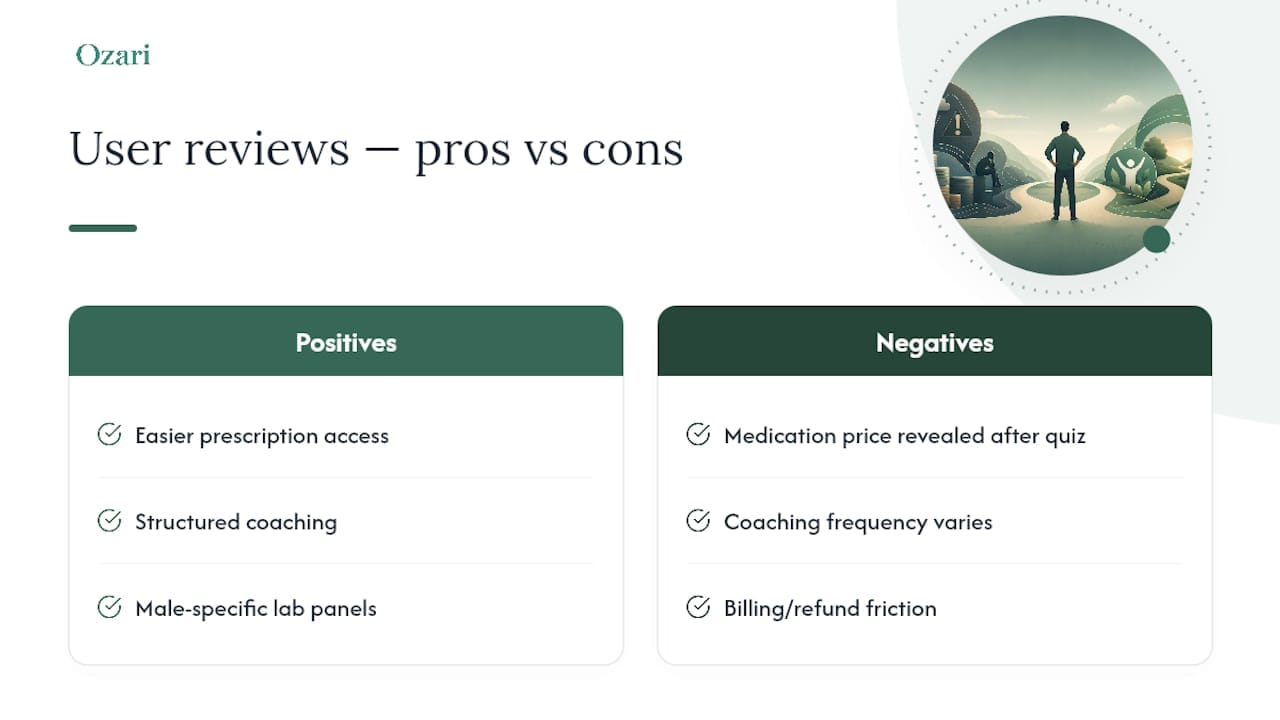
Aggregated reviews point to a fairly consistent split. On the positive side, men report easier access to a prescription than they'd get waiting for a primary care referral, along with structured coaching and lab panels aimed at male-specific markers.
On the negative side, the same complaint surfaces repeatedly: the advertised program fee looks affordable, but the real medication price only shows up after the intake quiz clears. Coaching frequency reportedly varies more than the marketing implies, and some reviewers describe friction around billing or refund requests.
One anecdote doesn't tell you much. A pattern across dozens of independent reviews, especially when it lines up with a provider's own pricing structure, is a stronger signal than any single complaint.
Fella Health or a Transparency-First Alternative: How to Decide
The choice usually comes down to what you're optimizing for: coaching intensity or cost certainty. If you want structured, male-focused check-ins and don't mind confirming pricing after intake, a coached program like Fella can fit. If you want a fixed number before you commit, a transparency-first cash-pay provider that publishes all-in pricing upfront is the better match.
Before signing up with any provider, ask these questions directly:
- What is the name of the compounding pharmacy filling my prescription?
- What is the total all-in monthly price, including medication, shipping, and any lab fees?
- What is the refund or cancellation window, and is it in writing?
- What are the prescribing clinician's credentials and state license status?
Walk away if a provider won't answer all four in writing. Proceed only once you have a documented price and a named pharmacy you can independently verify.
Pro Tip: Request your total year-one cost, not just the monthly rate, before comparing providers. A low headline price with a required renewal fee can cost more over twelve months than a slightly higher flat rate.
Our Take on Pricing Transparency and Pharmacy Safety
The men's telehealth GLP-1 category has a transparency problem, not just a Fella problem. Providers routinely gate medication pricing behind an intake quiz, which makes apples-to-apples comparison nearly impossible until you're already partway through sign-up. Ozari Health publishes all-in pricing upfront, semaglutide at $86 a month and tirzepatide at $125 a month on Ozari One, billed $258 or $375 every 3 months, and names its compounding pharmacy partners so patients can verify licensing themselves rather than taking a provider's word for it. Ozari One ships to every state except California; California patients use Ozari Select, $145/mo billed quarterly for semaglutide or $199/mo for tirzepatide. This article was reviewed by Dr. Michael Wasef, MD, FL License ME125730.
— Ozari Health Editorial Team
Ozari Health: Transparent Pricing With Named Pharmacy Partners
If coaching intensity isn't your top priority and a fixed, verifiable price is, Ozari Health is built around that exact preference. Compounded semaglutide is $86 a month on Ozari One, billed $258 every 3 months, and compounded tirzepatide is $125 a month, billed $375 every 3 months, both quoted as all-in prices with no hidden membership renewal stacked on top.
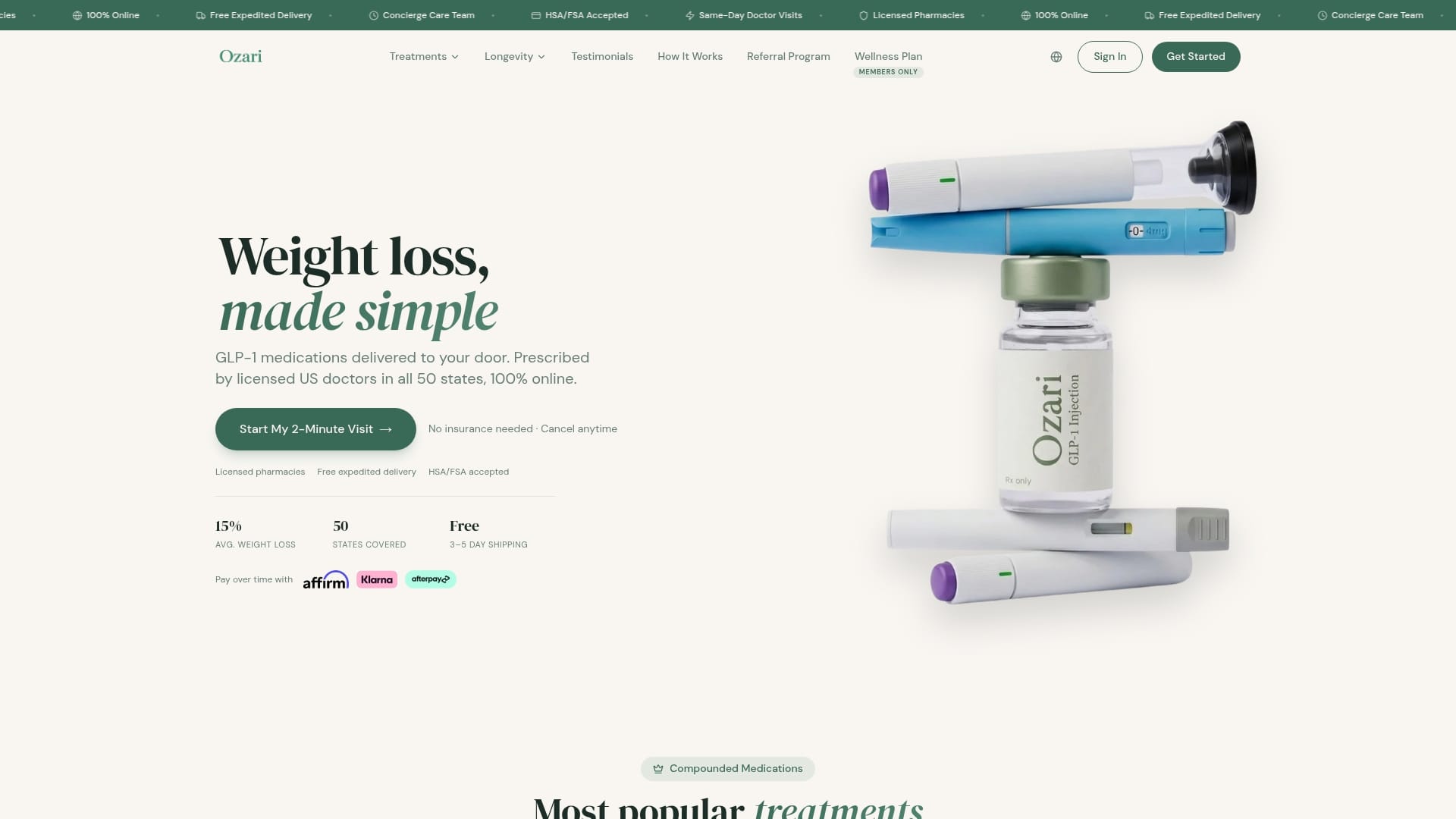
Every plan includes a licensed clinician review, prescription fulfillment through U.S. compounding pharmacies, and ongoing support for dosing questions, side effects, and refills. There's no insurance paperwork and no bundled membership fee separate from your medication cost. If you're comparing programs and want to see current compounded semaglutide pricing by state, start there to check your total monthly cost before you commit to anything.
Sources
- Safety analysis of compounded GLP-1 receptor agonists: a pharmacovigilance study using the FDA adverse event reporting system
- FDA’s concerns with unapproved GLP-1 drugs used for weight loss | FDA
- Why the FDA is cracking down on compound GLP-1 drugs for weight loss | Scientific American
This article is general information, not a substitute for advice from a qualified doctor. Consult a qualified healthcare professional about your own circumstances before acting on anything here.
FAQ
Is Fella Health Legitimate?
Fella Health operates as a real telehealth business with a documented clinical intake and prescribing process, but legitimacy doesn't guarantee the lowest cost or the fastest refund process. Verify LegitScript status, pharmacy partners, and BBB complaint history yourself before enrolling.
What Is the Cheapest GLP-1 Medication I Can Get Without Insurance?
Cash-pay pricing varies by provider and changes over time, so there's no single fixed answer, but compounded semaglutide plans, including Ozari One at $86 a month billed quarterly, are generally priced lower than brand-name Wegovy or Ozempic without insurance coverage.
What Is the Best Over-the-Counter Weight Loss Pill?
No over-the-counter pill matches the weight-loss results seen in clinical trials of prescription GLP-1 receptor agonists like semaglutide and tirzepatide, which require a prescription and medical supervision. Ozari Health does not make guaranteed weight-loss claims for any product.
Is There a Female Version of Fella Health?
Fella Health markets specifically to men, and companies serving women typically operate as separate brands under different names. Providers like Ozari Health serve adult patients regardless of gender through the same cash-pay telehealth model.
This article is for informational purposes only and does not constitute medical advice. Compounded semaglutide and tirzepatide are not FDA-approved and are not generic versions of Ozempic, Wegovy, Mounjaro, or Zepbound. Always consult a licensed healthcare provider before starting any weight-loss medication. Individual results vary, and no specific weight-loss outcome is guaranteed.
Related Articles
Hallandale Semaglutide vs Tirzepatide: What Patients Should Know
Compare the compounded semaglutide and tirzepatide formulations Hallandale currently lists, including concentrations, regulatory status, dosing differences, and Ozari fulfillment.
Read more →generalHallandale Pharmacy Shipping: Delivery, Packaging & Storage Guide
How Hallandale Pharmacy fulfillment works, what to check when a GLP-1 shipment arrives, storage guidance, delays, and Ozari order support.
Read more →generalHallandale Pharmacy FDA History: 483s, Warning Letter & What They Mean
A neutral timeline of Hallandale Pharmacy FDA records, including the 2020 warning letter, 2022 closeout, 2025 Form 483, and how to interpret each record.
Read more →