Is Compounded Tirzepatide Legal in the U.S. Right Now?
Published August 21, 2026

Routine, large-scale compounding of tirzepatide is no longer lawful in the United States now that the national shortage has resolved. A narrow exception still exists: a licensed 503A pharmacy can compound a patient-specific version when a prescriber documents a genuine clinical reason the FDA-approved drug won't work for that person. Outside that exception, mass-produced compounded tirzepatide sold without an individualized prescription falls outside FDA rules.
- Still allowed: 503A pharmacies compounding for a named patient with documented medical necessity.
- Not allowed: Bulk or "standard protocol" compounding once the FDA's shortage database shows tirzepatide supply has stabilized.
- Key dates: FDA supply-stabilization guidance issued April 1, 2026, with wind-down enforcement windows following shortly after.
Key Takeaways
Compounded tirzepatide remains lawful only through documented, patient-specific 503A prescribing, while routine bulk compounding lost its legal basis once FDA confirmed the national shortage had resolved.
| Point | Details |
|---|---|
| Shortage resolution changed everything | FDA's April 1, 2026 statement ended the broad compounding exception once supply stabilized. |
| 503A is the only remaining door | Compounding requires a documented clinical reason, not a standard protocol applied to every patient. |
| Safety risks are real and documented | Mislabeling, contamination, and counterfeit products have driven over 50 FDA warning letters in 2026. |
| Verify before you fill | Confirm patient-specific labeling, pharmacy licensure, and LegitScript or similar certification. |
| Ozari Health follows the lawful path | Licensed provider evaluations, named-patient prescriptions, and licensed pharmacy fulfillment; tirzepatide is $125/mo on Ozari One, billed quarterly. |
This article is general information, not a substitute for advice from a qualified doctor. Consult a qualified healthcare professional about your own circumstances before acting on anything here.
Table of Contents
- Is Compounded Tirzepatide Legal? The FDA Timeline Explained
- Is It Illegal to Compound Tirzepatide? Federal vs. State Rules
- What Safety Risks Come With Compounded Tirzepatide?
- How Can You Legally Get Tirzepatide in the U.S. Today?
- What Should You Ask Before Filling a Tirzepatide Prescription?
- 503A vs. 503B: What Pharmacies Need to Know Now
- A Lawful Telehealth Pathway to Tirzepatide
- Why Tighter Enforcement Is a Good Thing for Patients
- Get Lawful, Supervised Access to Compounded Tirzepatide
- Sources
- FAQ
Is Compounded Tirzepatide Legal? The FDA Timeline Explained
The legal answer today traces back to a specific sequence of federal actions, not a single ruling. Tirzepatide spent roughly two years on the FDA's official shortage list, which allowed both 503A pharmacies and 503B outsourcing facilities to compound it under looser rules. Once a drug is in shortage, FDA generally does not prioritize enforcement against compounders filling that gap, under the standards laid out in its guidance on compounding during drug shortages.
That changed when the agency's shortage database confirmed tirzepatide injection had come off shortage status. On April 1, 2026, the FDA published a statement clarifying its expectations for compounders as national supply stabilized. The message was blunt about where things stood.
Following that statement, FDA set wind-down windows for compounders still holding bulk tirzepatide inventory. Reporting on the enforcement timeline describes roughly 60 to 90-day grace periods for 503A and 503B facilities to sell off existing stock and stop new bulk production, a schedule outlined in industry coverage of the 2026 compounding regulations. Pharmacies that challenged the timeline in federal court, including litigation in the Northern District of Texas, largely saw their requests for injunctions denied, letting the wind-down proceed on schedule.
The agency didn't stop there. On June 15, 2026, FDA followed up with a separate warning specifically addressing unapproved and fraudulently marketed GLP-1 products, flagging counterfeit labeling and unlawful online sales as an active enforcement priority, according to its concerns statement on unapproved GLP-1 drugs. That same policy signaled something bigger: FDA now intends to exclude tirzepatide, semaglutide, and liraglutide from the 503B bulks list entirely, a move that would block the outsourcing-facility pathway even if a future shortage reopens it.
Here's the practical breakdown:
- During the shortage (before resolution): Both 503A and 503B facilities could compound tirzepatide under relaxed shortage rules.
- Now: 503B mass compounding is off the table for routine use; 503A remains open only for documented, patient-specific need.
- If the proposed bulks list exclusion finalizes: 503B compounding of tirzepatide would be barred even during a future shortage.
Is It Illegal to Compound Tirzepatide? Federal vs. State Rules
Compounding tirzepatide isn't automatically a crime. Whether it's lawful depends on which section of federal law governs the pharmacy and whether the prescription meets that section's requirements.
Section 503A of the Food, Drug, and Cosmetic Act allows a licensed pharmacy or physician to compound a drug for a specific, named patient when a prescriber determines the FDA-approved version isn't clinically appropriate for that person. That's a real exception, but it comes with a catch: the compound can't be "essentially a copy" of a commercially available drug unless the prescriber documents an actual clinical difference, such as an allergy to an inactive ingredient or a need for a different dosage form.
Section 503B covers outsourcing facilities, which can compound at scale, but only from substances on FDA's approved bulks list and only under current good manufacturing practice standards. Tirzepatide's presence on that list has always been tied to the shortage. Take the shortage away, and the legal basis for 503B tirzepatide compounding disappears with it.
What actually crosses the line into unlawful territory:
- Mass-producing tirzepatide vials without any individualized documentation.
- Telehealth intake forms that funnel every patient into the identical dose and formulation, regardless of medical history.
- Pharmacies operating without current state licensure or without a legitimate, verifiable active pharmaceutical ingredient (API) source.
Pro Tip: If you suspect a pharmacy or telehealth operator is compounding tirzepatide unlawfully, you can report it directly through FDA MedWatch or to your state's board of pharmacy. Both accept complaints from consumers, not just providers.
What Safety Risks Come With Compounded Tirzepatide?
Compounded tirzepatide never goes through the FDA's New Drug Application review process, which means it lacks the manufacturing and clinical-testing standards that apply to an FDA-approved product like Zepbound or Mounjaro. That gap is exactly what worries physicians.
Medical researchers have cautioned that compounding at scale strips away the safeguards that come from FDA's approval pathway, raising the odds that contaminated, mislabeled, or incorrectly dosed product reaches patients, according to Stanford Medicine's reporting on compounding safety. The main risks patients should know about:
- Mislabeling and dosing errors, where the vial's stated concentration doesn't match its actual contents.
- Contamination, since compounding pharmacies handle sterile injectables outside the tightly controlled conditions of a licensed manufacturer.
- Counterfeit or research-labeled products sold online with no legitimate prescription requirement at all.
- Improper shipping and storage, which can degrade a peptide drug that requires refrigeration.
FDA's enforcement record backs this up. The agency's warnings about unapproved GLP-1 products point to fraudulent labeling and unlawful marketing as recurring problems, and separate analysis counts more than 50 warning letters issued in 2026 targeting compounders and telehealth sellers of unapproved or misbranded semaglutide and tirzepatide, most citing mislabeling, sanitary failures, or unlawful interstate shipping, according to FDLI's regulatory commentary.
Pro Tip: Before accepting any tirzepatide shipment, check that the vial lists a specific patient name, a licensed pharmacy's name and address, and a lot number you can trace. A generic "research use only" label or missing patient information is a hard stop.

How Can You Legally Get Tirzepatide in the U.S. Today?
Getting tirzepatide lawfully now runs through one of two doors, and both require a real clinical evaluation rather than a checkout form.
- Start with an eligibility evaluation. A licensed provider reviews your health history, weight, and any conditions like type 2 diabetes to determine whether an FDA-approved product (Mounjaro or Zepbound) fits your case.
- If a branded product isn't appropriate, ask about documented 503A compounding. This only applies when your prescriber records a specific clinical reason, such as an allergy or a dosing need the commercial product can't meet.
- Confirm the fulfilling pharmacy's status. It should be a state-licensed 503A pharmacy, not an unregistered supplier or an offshore seller.
- Review the prescription details before payment. Your name, dose, and prescriber should all appear on the label.
Before filling anything, verify these points:
- The prescription names you specifically, not a "standard protocol."
- Your chart includes a documented clinical reason for compounding.
- The pharmacy discloses whether it operates under 503A or 503B and can show state licensure.
- The pharmacy sources its active ingredient from a verifiable, legitimate supplier and performs sterility testing.
- The pharmacy carries third-party verification, such as LegitScript certification.
On cost: FDA-approved tirzepatide (Zepbound, Mounjaro) is typically covered by insurance when medically indicated, though coverage varies widely by plan and often requires prior authorization. Compounded tirzepatide isn't insurance-reimbursable in most cases, since it isn't an FDA-approved product, which is why cash-pay platforms built around transparent tirzepatide pricing have become the more predictable option for patients paying out of pocket.
What Should You Ask Before Filling a Tirzepatide Prescription?
A short conversation with your provider and pharmacy can tell you almost everything you need to know about whether the process is lawful.
Ask your prescriber directly: "What specific clinical difference did you document that justifies compounding instead of the FDA-approved drug?" A provider who can't answer that in plain terms probably didn't document it at all. Ask the pharmacy: "Are you a state-licensed 503A pharmacy, and can you show me your registration?"
Watch for these red flags:
- Batch prescriptions that look identical across many patients.
- Telehealth intake forms that assign the same dose to everyone regardless of history.
- Prices that seem too low to cover legitimate sterile compounding costs.
- Any offer of oral tirzepatide or products labeled "research peptide," neither of which is a legitimate patient product.
Pro Tip: If you spot any of these signs, cancel the order, request a refund, and report the seller to FDA MedWatch before seeking a licensed alternative.
503A vs. 503B: What Pharmacies Need to Know Now
The two compounding pathways operate under different rules, and only one currently supports lawful tirzepatide compounding outside a documented exception.
| Factor | 503A pharmacy | 503B outsourcing facility |
|---|---|---|
| Who it serves | Named, individual patients with documented need | Bulk orders for offices, clinics, or other facilities |
| Manufacturing standard | State board oversight, not full cGMP | Must follow current good manufacturing practice |
| Bulk substance rules | Can compound with clinical justification even off the bulks list | Restricted to FDA's approved bulks list |
| Current tirzepatide status | Lawful only with documented clinical difference | No lawful basis once shortage is resolved |
FDA's proposed exclusion of GLP-1 drugs from the 503B bulks list would make this table permanent even if a future shortage develops. For compliance, pharmacies should maintain clear documentation of each patient's clinical rationale, keep cGMP records current if operating as a 503B, and register any change in scope with their state board before FDA inspection flags it as a mismatch.
A Lawful Telehealth Pathway to Tirzepatide
Ozari Health connects patients with state-licensed providers who conduct a genuine online evaluation before any prescription is written. When compounded tirzepatide is clinically appropriate, the prescription names the patient specifically and is fulfilled through licensed U.S. compounding pharmacy partners, not an anonymous overseas supplier.
- Licensed provider evaluation with documented medical need for each prescription.
- Fulfillment through named, licensed U.S. compounding pharmacies.
- Transparent pricing: compounded tirzepatide is $125/mo on Ozari One, billed $375 every 3 months, and compounded semaglutide is $86/mo on Ozari One, billed $258 every 3 months, with no hidden fees. Ozari One ships to every state except California; California patients use Ozari Select, $145/mo billed quarterly for semaglutide or $199/mo for tirzepatide.
- Ongoing clinical support for dosing questions, side effects, and refills.
Ozari Health is LegitScript certified and works exclusively with licensed pharmacy partners, reflecting the same documentation standards regulators expect from lawful 503A compounding.
Medical reviewer: Dr. Michael Wasef, MD, Board-Certified Internal Medicine, Florida License ME125730. This article is for informational purposes and does not guarantee weight-loss outcomes; individual results vary and depend on medical evaluation.
Why Tighter Enforcement Is a Good Thing for Patients
FDA's crackdown on mass compounded tirzepatide isn't bureaucratic overreach. It's a response to a real pattern of counterfeit labeling, contamination risk, and unlawful online sales that put patients in danger. The Ozari Health editorial team views the 503A patient-specific pathway, paired with licensed pharmacy oversight, as the only defensible model for compounded GLP-1 access right now. Supervised care matters more than speed, and no legitimate provider should promise guaranteed weight loss.
Get Lawful, Supervised Access to Compounded Tirzepatide
Skipping the guesswork around 503A documentation, pharmacy licensure, and product sourcing starts with working with a provider who builds those checks into the process from day one. Ozari Health's online evaluation connects you with a licensed U.S. provider who reviews your history, determines whether a compounded prescription is clinically appropriate, and fulfills it through named pharmacy partners rather than unverified sellers.
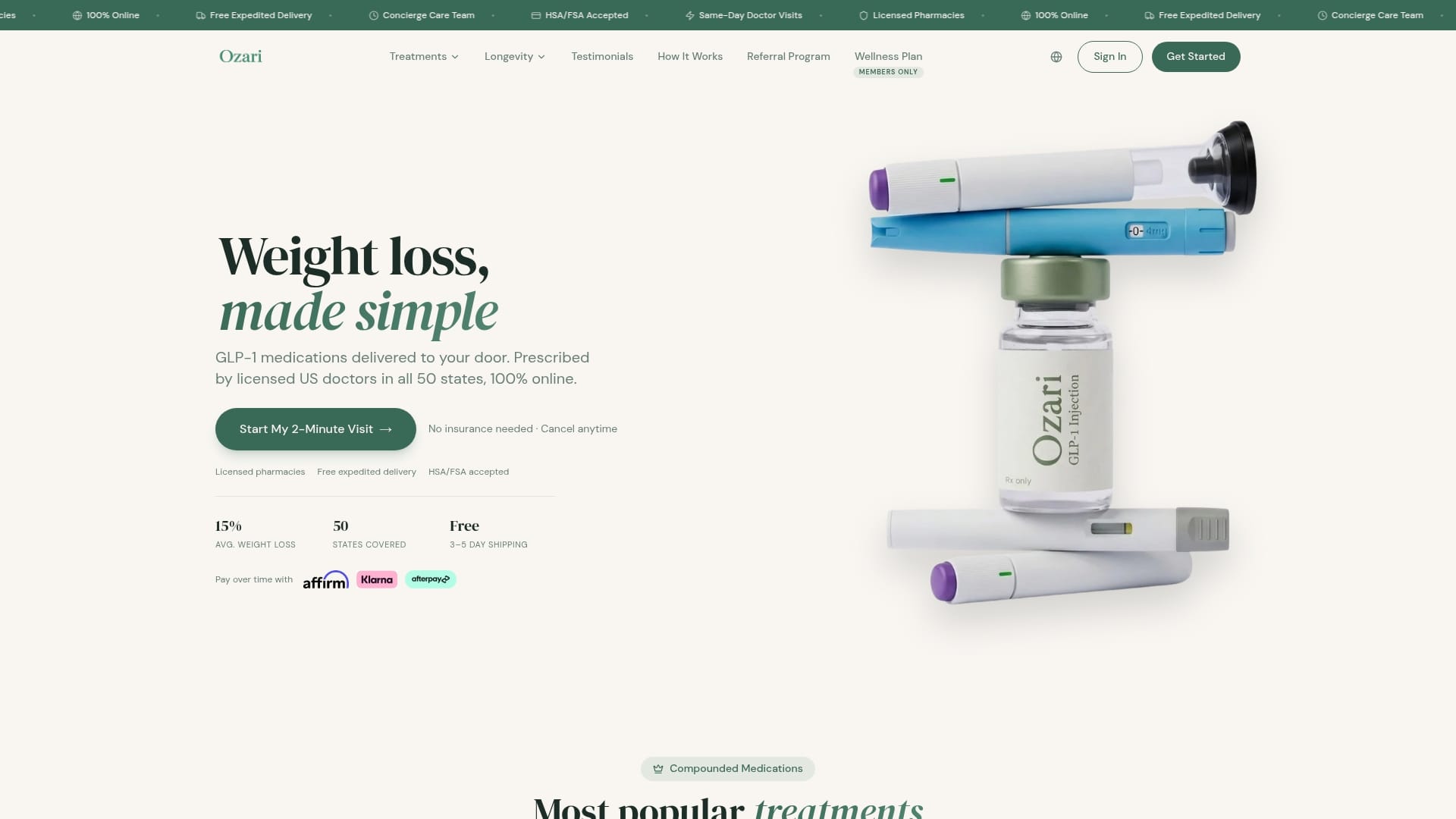
If a compounded prescription fits your case, your order ships from a licensed compounding pharmacy with transparent, all-in pricing and no insurance paperwork required. Check availability and current pricing on the compounded tirzepatide by state page, and review Ozari Health's safety guidance before your first order. Compounded medications are not FDA-approved and are not generic versions of Zepbound or Mounjaro; individual eligibility is determined by a licensed provider during your evaluation.
Sources
- FDA clarifies policies for compounders as national GLP-1 supply begins to stabilize
- FDA drug shortages: Tirzepatide injection active ingredient details
- GLP-1s and compounding: Why doctors worry about safety
- The FDA is right to prohibit mass production of unapproved GLP-1 drugs
FAQ
Can People Still Get Compounded Tirzepatide?
Yes, but only through a 503A pharmacy filling a patient-specific prescription with a documented clinical reason. Routine, mass-produced compounded tirzepatide is no longer lawful now that the national shortage has resolved.
Is It Illegal to Get Compounded Tirzepatide?
Possessing a legitimately prescribed, patient-specific compounded prescription isn't illegal. It becomes a legal problem when a pharmacy mass-produces the drug without documented medical necessity or sells it without a valid prescription.
Where Can I Get Compounded Tirzepatide?
You need a licensed provider to evaluate whether compounding is clinically appropriate for you, followed by fulfillment through a licensed U.S. 503A pharmacy. Telehealth platforms like Ozari Health connect patients with providers who follow this documented process.
Can My Doctor Prescribe Compounded Tirzepatide?
Your doctor can prescribe compounded tirzepatide only if they document a specific clinical reason the FDA-approved version isn't suitable for you. A doctor issuing identical compounded prescriptions to every patient without that documentation isn't following the lawful 503A standard.
Related Articles
Men: Fella Health Safety Risks, Real Costs, and an $86 Alternative
A safety-first look at Fella Health for men: why compounded GLP-1s show higher FDA reporting risks, how to calculate all-in monthly cost, and an $86 Ozari...
Read more →generalHallandale Semaglutide vs Tirzepatide: What Patients Should Know
Compare the compounded semaglutide and tirzepatide formulations Hallandale currently lists, including concentrations, regulatory status, dosing differences, and Ozari fulfillment.
Read more →generalHallandale Pharmacy Shipping: Delivery, Packaging & Storage Guide
How Hallandale Pharmacy fulfillment works, what to check when a GLP-1 shipment arrives, storage guidance, delays, and Ozari order support.
Read more →