Tirzepatide Injection Sites: A Safe Administration Guide
Published July 18, 2026

Medically reviewed by Dr. Michael Wasef, MD, Board-Certified Internal Medicine, Florida License ME125730.
What are the FDA-approved tirzepatide injection sites?
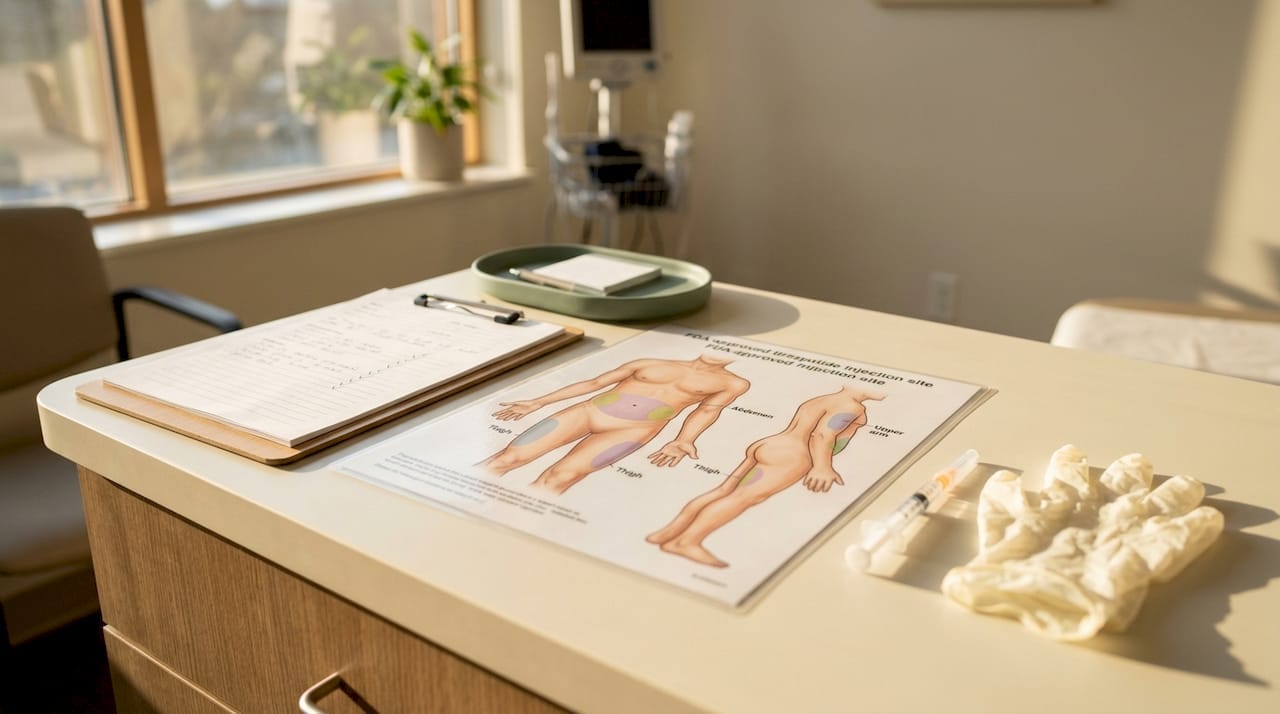
Tirzepatide is administered subcutaneously at three FDA-approved sites: the abdomen, the thigh, and the upper arm. Each location offers adequate subcutaneous fat for proper absorption, and rotating among them is standard clinical practice to protect tissue and maintain consistent medication delivery.
Here is a quick summary of each site:
- Abdomen: The most commonly preferred site. It offers the largest surface area and generally the most consistent absorption. Avoid injecting near the navel to reduce irritation risk.
- Thigh: The front or outer thigh works well for self-injection. Patients who find the abdomen uncomfortable often find the thigh easier to access and pinch.
- Upper arm: The outer, fleshy portion of the upper arm is approved but typically requires assistance for self-injection. It is a practical option when the other two sites need rest.
All three sites deliver the medication into subcutaneous fat tissue, which is the correct layer for tirzepatide absorption. Injecting into muscle is not recommended and can alter how the drug is absorbed.
How to choose the best injection site for you
The right site depends on your body composition, comfort level, and daily routine. Patients with more subcutaneous fat at a given location tend to find injections there less painful and more consistent. Those with less body fat may find the abdomen the most reliable option because it typically retains enough tissue even at lower body weights.
Key factors to consider when selecting a site:
- Subcutaneous fat availability: More fat at the site means less risk of accidentally injecting into muscle.
- Ease of self-injection: The abdomen and thigh are the most accessible for solo administration. The upper arm is harder to reach without a second person.
- Skin condition: Avoid areas with bruising, scarring, rashes, or active irritation from a previous injection.
- Clothing and daily activity: Some patients prefer the thigh when abdominal clothing pressure is a concern, or vice versa.
- Contraindications: Do not inject into areas with lipohypertrophy (thickened, lumpy tissue from repeated injections at the same spot), as absorption becomes unpredictable in those areas.
Pro Tip: If you notice persistent tenderness or a small lump forming at a site, skip that area for at least two to four weeks and let the tissue recover before returning to it.
Monitoring each site after injection is a practical habit. Mild redness or a small welt that fades within a few hours is normal. Anything that persists beyond 48 hours, spreads, or feels warm to the touch warrants a call to your provider.
Proper injection technique and how to rotate sites
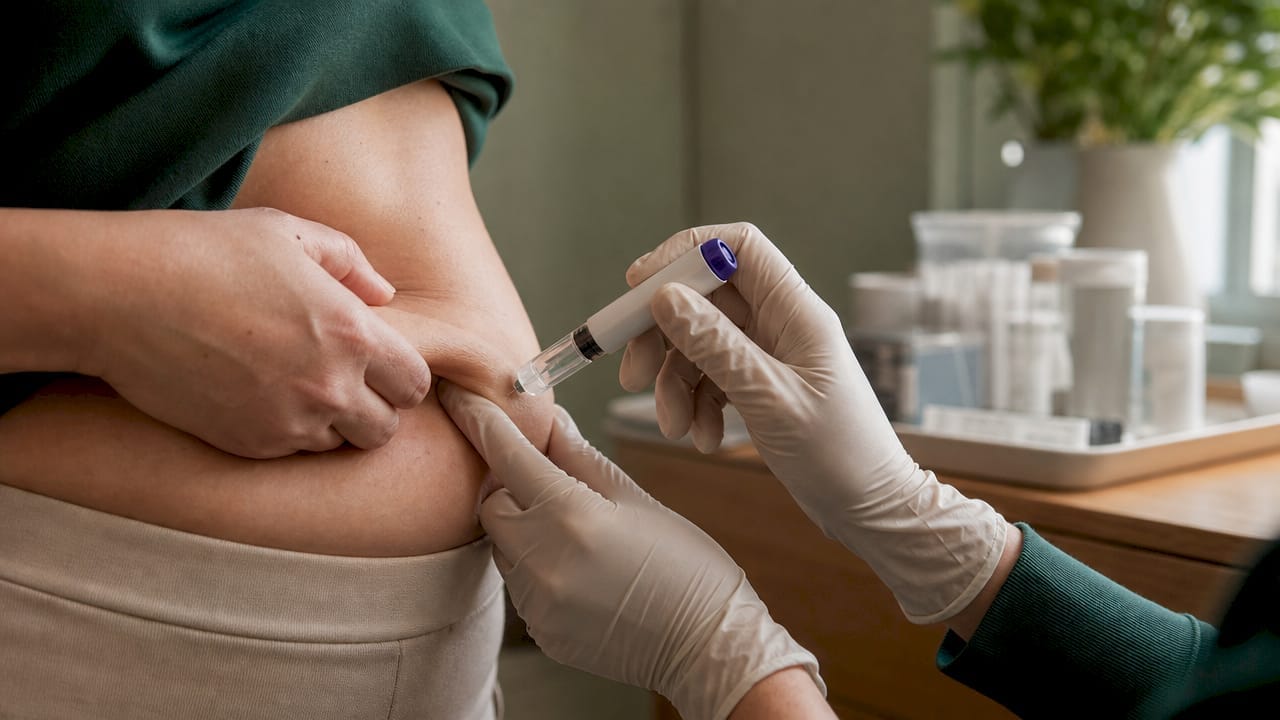
Consistent technique reduces discomfort and lowers the risk of complications. The FDA prescribing information for tirzepatide specifies subcutaneous administration, meaning the needle must reach the fat layer just beneath the skin, not the muscle below it.
Step-by-step injection guide
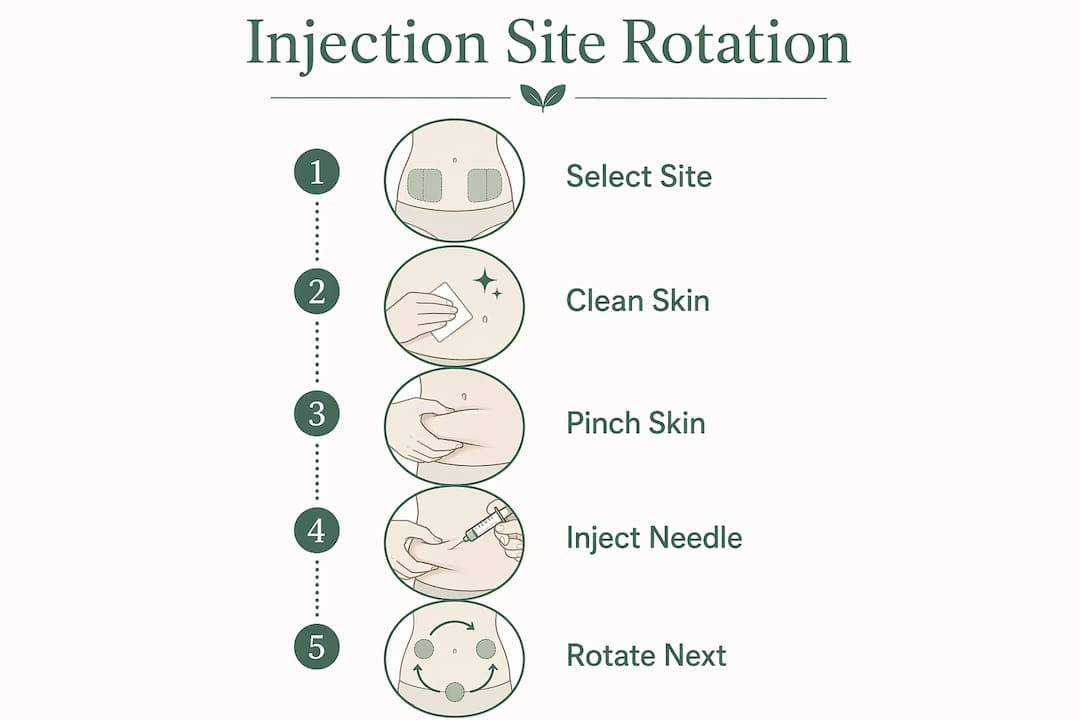
- Wash your hands thoroughly with soap and water for at least 20 seconds.
- Gather your supplies: your tirzepatide pen or vial and syringe, an alcohol swab, and a sharps disposal container.
- Clean the injection site with an alcohol swab and allow it to air dry completely before injecting.
- Prepare the dose according to your prescriber's instructions. If using a vial, draw the correct volume into the syringe.
- Pinch the skin gently at the chosen site to lift the subcutaneous layer away from the muscle beneath.
- Insert the needle at a 45–90 degree angle. Patients with less subcutaneous fat should use a 45-degree angle; those with more fat can use 90 degrees.
- Inject slowly and steadily, then withdraw the needle at the same angle it entered.
- Apply gentle pressure with a clean gauze or cotton ball. Do not rub the site.
- Dispose of the needle immediately in a sharps container. Never recap or reuse needles.
Tirzepatide needles are very small gauge, which keeps discomfort minimal for most patients.
Site rotation best practices
Rotating injection sites prevents lipohypertrophy, a condition where repeated injections at the same spot cause fibrous tissue buildup that impairs absorption. Rotate systematically rather than randomly.
- Move at least 1 inch from the previous injection point within the same site zone before returning to it.
- Cycle through all three approved sites over successive doses rather than staying in one area.
- Keep a simple log (a notes app or paper chart) tracking which site and location you used each week.
- Never inject into the same exact spot twice in a row.
Common side effects at tirzepatide injection sites
Local reactions are the most frequently reported side effects of subcutaneous GLP-1 therapy. Common reactions include mild bruising, redness, and irritation at the injection site, and most resolve on their own within a day or two.
Normal reactions (typically resolve without treatment):
- Mild redness or pink discoloration around the injection point
- Small raised welt or bump that flattens within a few hours
- Minor bruising, especially if a small blood vessel was nicked
- Temporary itching or tenderness at the site
Signs that warrant medical attention:
- Redness, swelling, or warmth that spreads beyond the injection area
- Pain that worsens over 24–48 hours rather than improving
- Pus, discharge, or fever, which may indicate infection
- Hard, persistent lumps that do not resolve after several weeks
Managing minor reactions is straightforward. Applying an ice pack to the site before injection can reduce discomfort. Ice packs and gentle massage after injection can ease bruising and irritation. Alternating sites consistently is the single most effective prevention strategy for local tissue damage.
Storage and handling before you inject
Proper storage directly affects injection site safety. Medication that has been stored incorrectly may degrade, and injecting degraded tirzepatide can increase the risk of local irritation or reduced effectiveness.
Storage guidelines:
- Store tirzepatide in the refrigerator at the recommended temperature range until the expiration date.
- If needed, the medication may be kept at room temperature (up to 86°F / 30°C) for a limited period per your prescriber's instructions. Check your specific product labeling for the exact duration.
- Never freeze tirzepatide. Frozen medication must be discarded.
- Keep the pen or vial away from direct light and heat sources.
Pre-injection handling:
- Remove the medication from the refrigerator some minutes before injecting to allow it to reach room temperature. Cold medication increases injection discomfort.
- Inspect the solution before each use. It should be clear and colorless to slightly yellow. Do not use it if it appears cloudy, discolored, or contains visible particles.
- Never shake the pen or vial. Roll it gently between your palms if mixing is needed.
- Wipe the vial stopper with a fresh alcohol swab each time you draw a dose.
Accessing tirzepatide treatment safely through telehealth
For patients across the United States, telehealth has made it significantly easier to access tirzepatide through a legitimate, provider-supervised process. Ozari Health operates a fully online platform connecting patients in all 50 states with licensed providers who evaluate eligibility and prescribe compounded tirzepatide at $125/mo on Ozari One, billed $375 every 3 months, with no insurance required and no hidden fees. Ozari One ships to every state except California; California patients use Ozari Select, $145/mo billed quarterly for semaglutide or $199/mo for tirzepatide.
Key advantages of the Ozari Health telehealth model:
- Licensed provider oversight: A clinician reviews your health history and determines appropriate dosing before any prescription is issued.
- Licensed US compounding pharmacies: Medications are fulfilled through vetted pharmacy partners and shipped directly to your door.
- Ongoing clinical support: Providers remain available for dosing adjustments, side effect questions, and refill management throughout treatment.
- Transparent, all-in pricing: Published pricing with no surprise fees. Compounded tirzepatide is $125/mo on Ozari One, billed quarterly; compounded semaglutide is $86/mo on Ozari One, billed quarterly.
- Nationwide access: Available in all 50 states, with HSA/FSA eligibility and free expedited shipping.
Patients who want to understand GLP-1 options in detail before starting can review Ozari Health's GLP-1 medication FAQ for plain-language answers on dosing, side effects, and costs.
Key Takeaways
The three FDA-approved tirzepatide injection sites are the abdomen, thigh, and upper arm, and rotating among them systematically is the most effective way to prevent tissue damage and maintain consistent absorption.
| Point | Details |
|---|---|
| Three approved sites | The abdomen, thigh, and upper arm are the only FDA-authorized subcutaneous injection locations for tirzepatide. |
| Abdomen is most preferred | It offers the largest surface area; avoid injecting within 2 inches of the navel. |
| Rotate every dose | Moving at least 1 inch from the previous injection point prevents lipohypertrophy and absorption problems. |
| Needle size is very fine gauge | Very fine needles minimize discomfort; inject at 45–90 degrees depending on subcutaneous fat depth. |
| Store refrigerated | Store tirzepatide refrigerated according to recommended temperatures and allow it to reach room temperature before injecting. |
FAQ
Where are the best injection sites for tirzepatide?
The abdomen is generally the preferred site due to its large surface area and consistent absorption. The thigh and outer upper arm are also FDA-approved and work well when rotated into the schedule.
Does it matter exactly where within a site you inject?
Yes. Within the abdomen, stay at least 2 inches from the navel. Within any site, move at least 1 inch from your last injection point to avoid repeated trauma to the same tissue.
How long does it take to lose 20 lbs on tirzepatide?
Weight loss timelines vary by individual and are not guaranteed. Clinical results depend on starting weight, dose, diet, activity level, and adherence. Patients should discuss realistic expectations with their prescribing provider.
What is replacing tirzepatide?
No medication has replaced tirzepatide. It remains an active, widely prescribed GLP-1/GIP receptor agonist. Newer agents are in clinical development, but tirzepatide continues to be prescribed for both type 2 diabetes and weight management.
How do you manage bruising or irritation at the injection site?
Applying an ice pack before injection reduces discomfort, and gentle pressure after withdrawal limits bruising. Rotating sites consistently is the most reliable way to prevent recurring irritation at any single location.
Sources
Medical Disclaimer: This article is for informational purposes only and does not constitute medical advice. Always consult a licensed healthcare provider before starting, adjusting, or stopping any medication, including tirzepatide. Compounded tirzepatide is not FDA-approved and is not a generic version of any branded product.
Related Articles
Men: Fella Health Safety Risks, Real Costs, and an $86 Alternative
A safety-first look at Fella Health for men: why compounded GLP-1s show higher FDA reporting risks, how to calculate all-in monthly cost, and an $86 Ozari...
Read more →generalHallandale Semaglutide vs Tirzepatide: What Patients Should Know
Compare the compounded semaglutide and tirzepatide formulations Hallandale currently lists, including concentrations, regulatory status, dosing differences, and Ozari fulfillment.
Read more →generalHallandale Pharmacy Shipping: Delivery, Packaging & Storage Guide
How Hallandale Pharmacy fulfillment works, what to check when a GLP-1 shipment arrives, storage guidance, delays, and Ozari order support.
Read more →