Tirzepatide Dosing Guide: Schedules, Charts, and Tips
Published July 20, 2026

TL;DR:
- Tirzepatide is a dual GIP/GLP-1 receptor agonist used for type 2 diabetes and weight management. Its dosing starts at 2.5 mg weekly, increasing in 2.5 mg steps every four weeks up to 15 mg, based on tolerability and response. Proper injection technique, site rotation, and adherence to missed dose protocols are essential for safety and effectiveness.
Tirzepatide is defined as a dual GIP/GLP-1 receptor agonist prescribed for type 2 diabetes management and chronic weight management in adults. The standard tirzepatide dosing schedule starts at 2.5 mg once weekly for the first four weeks, then increases in 2.5 mg increments every four weeks up to a maximum of 15 mg weekly. This tirzepatide dosing guide covers every phase of that process, from the first injection to finding your maintenance dose, with practical guidance on injection technique, missed doses, and reading a tirzepatide dosing chart. Always work with a licensed healthcare provider before making any changes to your dose.
What is the standard tirzepatide dosing schedule?
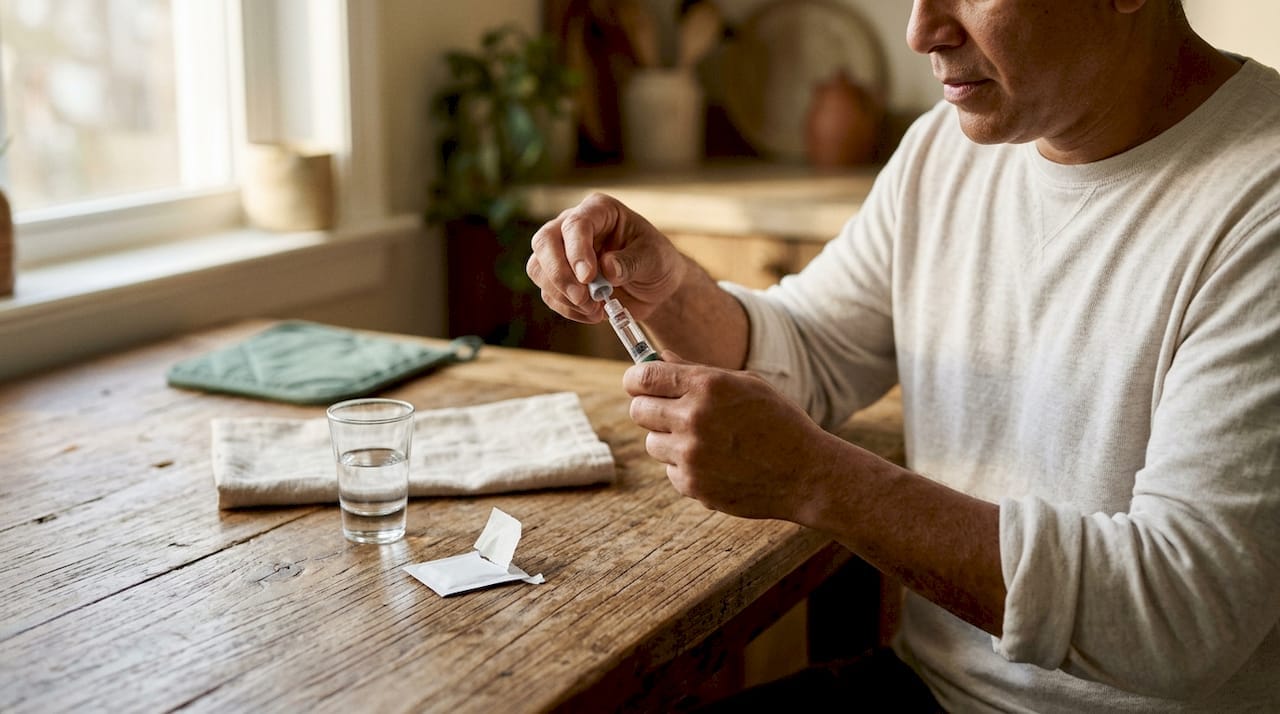
The tirzepatide titration schedule follows a fixed stepwise pattern designed to let your body adjust gradually. Starting too high increases the risk of nausea, vomiting, and other gastrointestinal side effects. The slow ramp-up is not a formality. It is the mechanism that makes the medication tolerable for most patients.
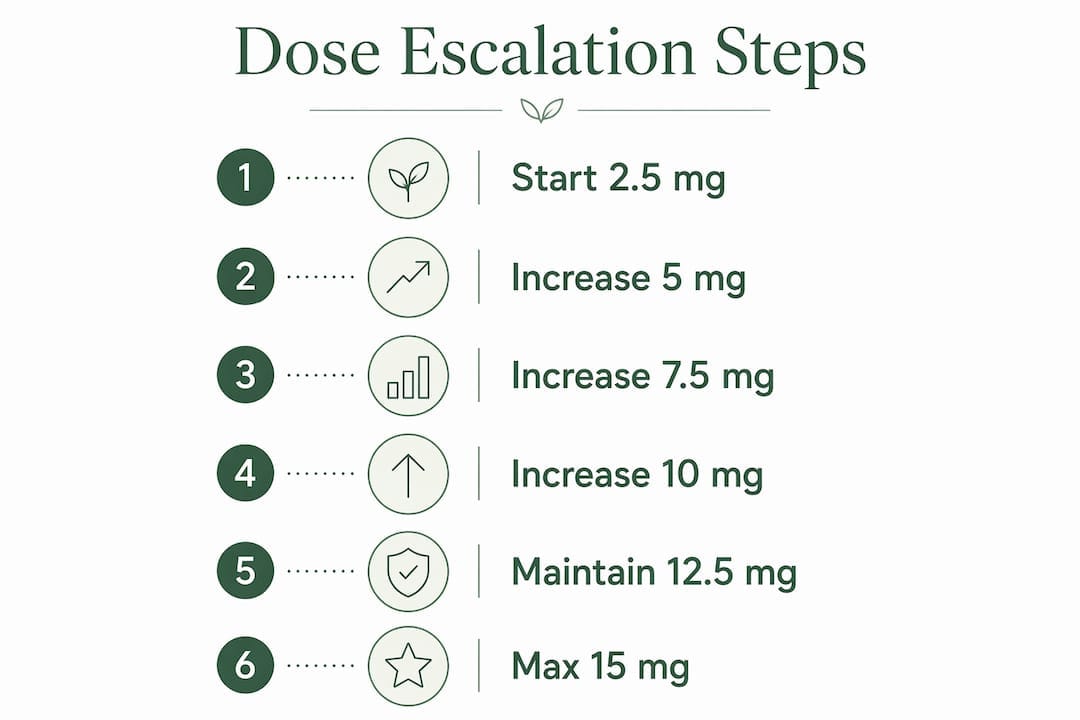
The FDA-approved titration sequence moves through these dose levels:
- 2.5 mg once weekly for weeks 1–4 (initiation dose only, not a therapeutic dose)
- 5 mg once weekly for weeks 5–8
- 7.5 mg once weekly for weeks 9–12
- 10 mg once weekly for weeks 13–16
- 12.5 mg once weekly for weeks 17–20
- 15 mg once weekly for weeks 21 and beyond (maximum dose)
Not every patient needs to reach 15 mg. Lower maintenance doses such as 5 mg or 10 mg may deliver sufficient results with fewer side effects and lower monthly costs. The goal is the lowest effective dose, not the highest tolerated one.
Your prescriber evaluates your response and tolerability at each four-week interval. If side effects are significant at a given dose, the titration can pause at that level before moving up. Dose titration requires ongoing collaboration between patient and provider to balance efficacy with tolerability.
Pro Tip: If you feel well at 5 mg or 7.5 mg and your weight loss or blood sugar goals are being met, ask your provider whether staying at that dose makes sense before escalating further.
How to administer tirzepatide injections correctly
Correct injection technique protects both the effectiveness of the dose and the health of your injection sites. Tirzepatide is administered subcutaneously once weekly, meaning just under the skin, not into muscle or a vein. You can inject at any time of day, with or without food.
Three approved injection sites exist:
- Abdomen (at least 2 inches from the navel)
- Upper thigh (front or outer surface)
- Upper arm (outer surface, typically used when someone else administers the injection)
Rotating injection sites with every dose prevents lipohypertrophy, a condition where fatty tissue builds up under the skin from repeated injections in the same spot. That buildup slows absorption and reduces the medication's effectiveness. Rotate within the same body region or move to a different region entirely each week.
Tirzepatide comes in three delivery formats: single-dose pens, multi-dose KwikPen, and vials with syringes. Single-dose pens are the most common format for new patients because they require no dose measurement. Vials with syringes are typically used with compounded tirzepatide and require careful attention to the prescribed volume.
If you also use insulin, avoid injecting in adjacent sites during the same session. Injecting tirzepatide and insulin too close together can cause local irritation or unpredictable absorption of both medications.
Pro Tip: Keep a simple rotation log, either on paper or in a notes app, tracking which site you used each week. After a few months, patterns become easy to spot and correct.
Managing missed doses and adjusting your schedule safely
Missing a weekly injection does not require starting over, but the timing of your response matters. The FDA prescribing guidance on missed doses is specific and worth following exactly:
- If fewer than 4 days have passed since your missed dose, inject it as soon as you remember.
- If more than 4 days have passed, skip the missed dose entirely and resume your regular schedule on the next scheduled day.
- Never double dose. Taking two doses close together increases the risk of nausea, vomiting, and hypoglycemia.
- Never inject doses fewer than 3 days apart, regardless of the reason.
- If you need to change your weekly injection day, the new day is acceptable as long as at least 3 days separate the last dose from the new one.
"The weekly injection day can be changed if necessary, provided there are at least 3 days between doses to maintain proper spacing." — FDA Package Insert, Mounjaro
Dose adjustments beyond missed-dose management require medical supervision. If side effects at a given dose level are persistent, your provider may hold the titration at the current dose for an additional four weeks before increasing. Patients monitoring side effects and efficacy every four weeks with their provider are better positioned to reach a stable maintenance dose without unnecessary discomfort.
How to read a tirzepatide dosing chart and dose conversion table
A tirzepatide dose conversion chart translates dose strength in milligrams into the injection volume in milliliters. This matters most for patients using vials with syringes, where you draw up the dose manually. Misreading the chart is one of the most common errors in self-administered injectable therapy.
Standard tirzepatide dose escalation table
| Dose (mg) | Injection volume (mL) | Typical week range | Device options |
|---|---|---|---|
| 2.5 mg | 0.5 mL | Weeks 1–4 | Single-dose pen, vial |
| 5 mg | 0.5 mL | Weeks 5–8 | Single-dose pen, KwikPen, vial |
| 7.5 mg | 0.5 mL | Weeks 9–12 | Single-dose pen, KwikPen, vial |
| 10 mg | 0.5 mL | Weeks 13–16 | Single-dose pen, KwikPen, vial |
| 12.5 mg | 0.5 mL | Weeks 17–20 | Single-dose pen, KwikPen, vial |
| 15 mg | 0.5 mL | Week 21+ | Single-dose pen, KwikPen, vial |
Tirzepatide is available in six dose strengths: 2.5, 5, 7.5, 10, 12.5, and 15 mg. Each strength is formulated so the injection volume stays consistent across doses. That means the concentration of the solution changes with each dose level, not the volume you inject. This is a critical distinction when switching between device types or pharmacy sources.
Single-dose pens are pre-filled and pre-set, so no calculation is needed. Multi-dose KwikPens require dialing to the correct dose before each injection. Vials require drawing the correct volume into a syringe based on the concentration labeled on the vial. Compounded tirzepatide from a licensed pharmacy will specify the concentration on the vial label, and your provider will confirm the correct draw volume for your prescribed dose.
Pro Tip: When using a vial, always confirm the concentration (mg/mL) printed on the label before drawing your dose. A 5 mg/mL vial and a 10 mg/mL vial require different volumes for the same dose. Never assume the volume without checking.
For patients researching tirzepatide side effects alongside dosing, understanding how dose level relates to tolerability helps you have a more productive conversation with your provider at each check-in.
Key Takeaways
The most effective approach to tirzepatide dosing is a slow, supervised titration to the lowest dose that meets your clinical goals, not a race to the maximum.
| Point | Details |
|---|---|
| Start at 2.5 mg weekly | The initiation dose is 2.5 mg for four weeks; it is not a therapeutic dose, just a tolerance phase. |
| Increase every four weeks | Dose escalates in 2.5 mg increments every four weeks, with provider review at each step. |
| Maximum dose is 15 mg | Not all patients need 15 mg; lower maintenance doses reduce side effects and monthly costs. |
| Rotate injection sites | Rotating among abdomen, thigh, and upper arm prevents tissue buildup and maintains absorption. |
| Missed dose rules are strict | Inject within 4 days of a missed dose; skip it if more than 4 days have passed; never double dose. |
The case for patience during tirzepatide titration
The most common mistake patients make with tirzepatide is treating the titration schedule as an obstacle rather than a clinical tool. At Ozari Health, we see patients who want to reach 15 mg as quickly as possible because they assume higher doses produce faster results. That logic is understandable, but it often leads to side effects that cause patients to stop the medication entirely.
The clinical evidence is clear: therapeutic goals prioritize the lowest effective maintenance dose. A patient who stabilizes at 7.5 mg with good tolerability and steady progress is in a better position than one who pushed to 15 mg and spent weeks managing nausea. Slow titration is not a compromise. It is the intended design.
Cost is also a real factor. Higher doses cost more per month, and the difference between a 5 mg and a 15 mg maintenance dose adds up over a year of treatment. If a lower dose achieves your goals, staying there is both clinically sound and financially practical.
The patients who do best are those who treat every four-week check-in as a genuine assessment, not a formality. They track how they feel, note any side effects, and communicate openly with their provider. That active participation is what separates a successful titration from one that stalls or stops.
— Ozari Health Editorial Team
Compounded tirzepatide through Ozari Health
Ozari Health provides fully online GLP-1 care for patients across all 50 states, with no insurance required and no hidden fees.
Licensed providers review your eligibility and prescribe compounded tirzepatide at $125/mo on Ozari One, billed $375 every 3 months, fulfilled through licensed US compounding pharmacies and shipped directly to you. Ozari One ships to every state except California; California patients use Ozari Select, $199/mo billed quarterly for tirzepatide. Dosing support, side effect guidance, and refill management are included in the process. Patients who want to review pricing, clinical trial data, and side effect comparisons across GLP-1 medications can access Ozari's GLP-1 open datasets for transparent, published information. If you are ready to get started or want to review your dose options with a licensed provider, visit Ozari Health to begin.
This article is for informational purposes only and does not constitute medical advice. Consult a licensed healthcare provider before starting or adjusting any medication. Reviewed by Dr. Michael Wasef, MD, Board-Certified Internal Medicine, Florida License ME125730.
FAQ
What is the starting dose for tirzepatide?
The starting dose is 2.5 mg once weekly for the first four weeks. This initiation dose is not intended to produce full therapeutic effects; it allows your body to adjust before the dose increases.
How often does the tirzepatide dose increase?
The dose increases by 2.5 mg every four weeks, based on tolerability and clinical response. Your provider evaluates your progress at each interval before recommending the next step up.
What is the maximum tirzepatide dose?
The maximum approved dose is 15 mg once weekly. Not all patients require this level; many reach their clinical goals at lower maintenance doses such as 5 mg or 10 mg.
What should I do if I miss a tirzepatide injection?
Inject the missed dose as soon as possible if fewer than four days have passed. If more than four days have passed, skip it and resume your regular schedule. Never take two doses within three days of each other.
Can I change the day I take my weekly tirzepatide injection?
Yes. You can change your weekly injection day as long as at least three days separate the previous dose from the new one. Confirm the change with your provider to keep your titration schedule on track.
Sources
Related Articles
Men: Fella Health Safety Risks, Real Costs, and an $86 Alternative
A safety-first look at Fella Health for men: why compounded GLP-1s show higher FDA reporting risks, how to calculate all-in monthly cost, and an $86 Ozari...
Read more →generalHallandale Semaglutide vs Tirzepatide: What Patients Should Know
Compare the compounded semaglutide and tirzepatide formulations Hallandale currently lists, including concentrations, regulatory status, dosing differences, and Ozari fulfillment.
Read more →generalHallandale Pharmacy Shipping: Delivery, Packaging & Storage Guide
How Hallandale Pharmacy fulfillment works, what to check when a GLP-1 shipment arrives, storage guidance, delays, and Ozari order support.
Read more →