How to Lower Weight Loss Medication Monthly Cost
Published July 3, 2026

The monthly cost of GLP-1 weight loss medications is defined by which pricing channel you access, not by the retail sticker price. Branded drugs like Wegovy and Zepbound carry retail pharmacy cash prices exceeding $1,000 per month, but that figure is not what most patients actually pay. Three distinct pathways now exist to lower weight loss medication monthly cost significantly: Medicare's new $50 flat copay pilot program launching in July 2026, manufacturer direct programs offering branded drugs at $149–$699 per month, and compounded semaglutide or tirzepatide plans starting well below $200 per month. Understanding which channel applies to your situation is the single most important step you can take before filling any prescription.
What are the main cost factors driving weight loss medication prices?
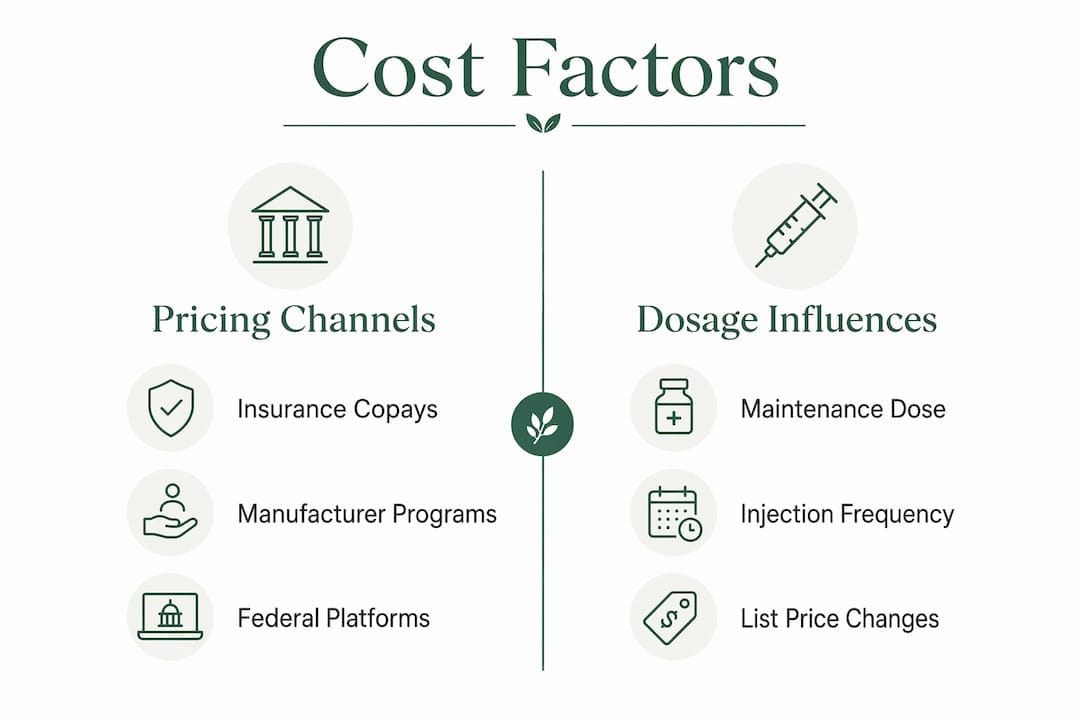
Four distinct pricing tiers govern what patients actually pay for GLP-1 medications in 2026: traditional insurance copays (around $25), manufacturer backed cash pay programs ($149–$699), federal platform pricing ($149–$349), and retail pharmacy cash prices above $1,000. The tier you land in depends on your insurance status, your eligibility for specific programs, and which drug your provider prescribes. Patients who fill prescriptions without checking their options first almost always pay the highest tier by default.
Dosage also affects monthly cost in ways many patients do not anticipate. Higher maintenance doses of injectable GLP-1 drugs cost more per unit, which means a patient who escalates from a starter dose to a full therapeutic dose may see their monthly bill increase even within the same program. The Medicare Bridge pilot program is a notable exception: its $50 copay applies regardless of dosage level, which makes it particularly valuable for patients who need higher doses long term.

List prices are also shifting. Novo Nordisk has announced plans to reduce list prices for Wegovy and Ozempic by approximately 50% starting January 2027. That reduction will ripple through insurance copay calculations and cash pay programs alike, making the weight loss medication price environment more favorable over the next 12–18 months.
| Pricing channel | Typical monthly cost | Who qualifies |
|---|---|---|
| Traditional insurance copay | ~$25 | Patients with qualifying commercial insurance |
| Manufacturer direct / cash pay | $149–$699 | Cash pay patients meeting program criteria |
| Federal platform (e.g., TrumpRx) | $149–$349 | Eligible US residents, no insurance required |
| Retail pharmacy cash price | $1,000+ | Anyone, but no savings applied |
| Medicare Bridge pilot (from July 2026) | $50 flat | Medicare Part D beneficiaries meeting criteria |
Who qualifies for Medicare's $50 copay weight loss drug pilot?
Eligible Medicare beneficiaries can access Wegovy (pill and injectable), Zepbound KwikPen, and Foundayo pill for a flat $50 monthly copay through the Medicare Bridge program beginning July 2026. This is a federal pilot program, not a standard Part D benefit, which means it operates under separate rules that both patients and physicians need to understand before attempting to use it.
Accessing the program requires these steps:
- Confirm eligibility. You must be enrolled in Medicare Part D and have a qualifying obesity or weight related diagnosis documented in your medical record.
- Get a prescription from your doctor. The prescribing physician does not need to be enrolled as a Medicare provider to submit authorization for this program.
- Prior authorization goes to Humana, not your Part D plan. Your doctor submits prior authorization directly to Humana, the CMS contractor managing the Bridge program. Submitting to your regular Part D insurer will not work and will likely result in a denial or full retail pricing.
- Fill at a participating pharmacy. Once authorization is approved, you fill the prescription at a pharmacy participating in the Bridge program and pay the $50 flat copay.
- Understand the limitations. The $50 copay does not count toward your Part D deductible or your annual out of pocket cap. Budget for this as a separate recurring expense.
The pilot program is expected to run through the end of 2026, with CMS evaluating outcomes before deciding on permanent coverage expansion. Patients who qualify should act promptly, as program terms may change.
Pro Tip: Ask your doctor specifically whether they know how to submit prior authorization to Humana for the Medicare Bridge program. Many physicians are unaware of this routing requirement, and a misdirected authorization request will delay access by weeks.
How to use manufacturer programs and federal platforms for lower cash pay prices
Manufacturer direct programs represent the most accessible path to affordable weight loss drugs for cash pay patients who do not qualify for Medicare or whose insurance does not cover GLP-1 medications. These programs bypass the traditional pharmacy benefit entirely and sell directly to patients at prices well below retail.
Current pricing through manufacturer and federal channels includes:
- Wegovy pill form: approximately $149 per month through manufacturer direct channels, making it the most affordable branded oral GLP-1 option available.
- Wegovy injectable pens: $199–$349 per month depending on dose, also through manufacturer direct programs.
- Zepbound vials: $299–$699 per month through LillyDirect, the manufacturer's own cash pay platform.
- Federal platforms like TrumpRx: offer pricing in the $149–$349 range for select branded GLP-1 drugs, with eligibility open to US residents regardless of insurance status.
The primary drawback of manufacturer direct programs is that pricing and eligibility criteria can change without much notice. Market analysts expect rapid price adjustments as manufacturers compete aggressively for cash pay patients. Checking program terms monthly is a practical habit for anyone relying on these channels.
Pro Tip: Apply to manufacturer programs before your first prescription fill, not after. Retroactive savings are rarely available, and the application process can take several days to complete.
What are compounded GLP-1 medications and are they cost effective?
Compounded semaglutide and compounded tirzepatide are versions of the active GLP-1 drug ingredients prepared by licensed US compounding pharmacies. They are not FDA approved as finished drug products, but they are legally produced under federal pharmacy compounding regulations when the branded equivalent is on the FDA drug shortage list or when a patient has a documented clinical need. Compounded versions are not bioequivalent substitutes and are not therapeutically equivalent to FDA-approved products. The compounded preparation itself has not been reviewed by the FDA for safety, effectiveness, or manufacturing quality.
The cost advantage is substantial. Telehealth providers bundle provider fees and compounded semaglutide medication into plans with total monthly costs starting at approximately $178. That figure includes the clinical consultation, dosing support, and the medication itself. Ozari Health, for example, offers Ozari One compounded semaglutide at $86/mo and compounded tirzepatide at $125/mo, each billed every 3 months ($258 and $375), with no insurance required and no hidden membership fees. Ozari One ships to every state except California; California patients use Ozari Select, $145/mo billed quarterly for semaglutide or $199/mo for tirzepatide. Medications are fulfilled through licensed US compounding pharmacies and shipped directly to patients in all 50 states.
| Feature | Branded GLP-1 (cash pay) | Compounded GLP-1 (telehealth) |
|---|---|---|
| Monthly cost range | $149–$699+ | $86–$178+ |
| FDA approval status | Approved finished product | Compounded, not FDA approved |
| Insurance accepted | Sometimes | Typically cash pay only |
| Prescription required | Yes | Yes, via telehealth provider |
| Regulatory risk | Low | Monitor FDA shortage list status |
The regulatory environment for compounded GLP-1s is worth watching closely. The FDA has proposed excluding compounded semaglutide from 503B outsourcing pharmacy lists, which could affect supply and pricing. Patients using compounded options should monitor these developments and have a contingency plan if their current source becomes unavailable.
Pro Tip: When evaluating a telehealth provider for compounded GLP-1 medications, look for LegitScript certification and named pharmacy partners. These two markers indicate the provider operates within established legal and safety standards, not just a low price point.
Key Takeaways
The most cost effective path to GLP-1 treatment depends on your insurance status, Medicare eligibility, and willingness to use compounded alternatives or manufacturer direct programs.
| Point | Details |
|---|---|
| Four pricing tiers exist | Insurance copays, manufacturer direct, federal platforms, and retail cash prices all differ significantly. |
| Medicare Bridge saves the most | Eligible Medicare patients pay a flat $50 per month regardless of drug dosage starting July 2026. |
| Manufacturer programs beat retail | Branded drugs cost $149–$699 through direct channels versus $1,000+ at retail pharmacies. |
| Compounded options cost least | Compounded semaglutide runs $86/mo on Ozari One, billed quarterly, through a licensed telehealth provider. |
| Regulations affect compounded supply | FDA policy changes may limit compounded GLP-1 availability; patients should monitor the shortage list status. |
What guides often miss about navigating GLP-1 costs
The pricing conversation around GLP-1 medications tends to focus on the sticker price, which is almost never what a patient actually pays. A more useful framing treats affordability as a qualification problem, not a price problem. The question is not "how much does Wegovy cost?" but "which pricing channel does a patient qualify for, and how do they access it correctly?"
The Medicare Bridge program is a clear example. The $50 copay is genuinely significant, but the prior authorization routing to Humana rather than a standard Part D plan is a detail that can trip up patients and physicians alike. Healthcare professionals note that patients who successfully access affordable weight loss medications actively research manufacturer savings and alternative procurement paths rather than relying on their pharmacy or insurer to surface the best option automatically.
The compounded medication space is where confusion is most common. Patients often assume "compounded" means lower quality, when the real variable is whether the pharmacy is licensed and operating under proper oversight. A LegitScript certified telehealth provider using a named 503A or 503B pharmacy is a materially different situation from an unverified online seller. Price alone is not a sufficient filter. The GLP-1 pricing data available through Ozari Health gives patients a clear reference point for what legitimate compounded programs actually cost, which makes it easier to spot outliers in either direction.
This market is moving quickly. Novo Nordisk's planned 50% list price reduction in January 2027 will change the math on every pricing tier. Patients who check program terms quarterly will consistently pay less than those who set and forget their prescription source.
Ozari Health makes compounded GLP-1 access straightforward
Ozari Health is a fully online GLP-1 telehealth platform serving patients in all 50 states, built specifically for cash pay patients who want a legitimate prescription process without insurance complexity or branded drug pricing.
Ozari One compounded semaglutide is $86/mo and compounded tirzepatide is $125/mo, each billed every 3 months; Ozari Select is $145/mo for semaglutide or $199/mo for tirzepatide billed quarterly, with monthly, semi-annual and annual options. All pricing is published upfront with no hidden membership fees. Licensed providers review eligibility, issue prescriptions, and provide ongoing clinical support for dosing and side effects. Medications ship from licensed US compounding pharmacies directly to your door. Ozari Health holds LegitScript certification and publishes its pharmacy partners by name. Patients who want to compare options before committing can review current GLP-1 pricing data or explore the full compounded semaglutide program to see exactly what is included at each price point.
FAQ
What is the cheapest monthly cost for weight loss medication in 2026?
Compounded semaglutide through a licensed telehealth provider like Ozari Health runs $86/mo on Ozari One, billed $258 every 3 months, which sits below every branded cash-pay channel for patients paying out of pocket. Medicare Bridge program participants pay a flat $50 per month for select branded GLP-1 drugs starting July 2026.
How does the Medicare $50 copay weight loss drug program work?
The Medicare Bridge pilot program covers Wegovy, Zepbound KwikPen, and Foundayo at a flat $50 monthly copay regardless of dosage. Prior authorization must be submitted to Humana, the CMS contractor, not to a standard Part D plan.
Are compounded GLP-1 medications safe and legal?
Compounded semaglutide and tirzepatide are legal when produced by licensed US compounding pharmacies under federal regulations. They are not FDA approved as finished drug products, so patients should use providers with LegitScript certification and named pharmacy partners to verify legitimacy.
How much do branded weight loss drugs cost without insurance?
Through manufacturer direct programs, Wegovy pills cost approximately $149 per month and Zepbound vials range from $299 to $699 per month. Retail pharmacy cash prices for the same drugs exceed $1,000 per month without any savings program applied.
Will weight loss drug prices drop further in 2027?
Novo Nordisk has announced a planned 50% reduction in Wegovy and Ozempic list prices beginning January 2027. That reduction will affect insurance copay calculations and cash pay program pricing across all channels.
Sources
- Four distinct pricing tiers
- Eligible Medicare beneficiaries
- Telehealth providers bundle
- The FDA has proposed
- Healthcare professionals note
Recommended
Related Articles
Men: Fella Health Safety Risks, Real Costs, and an $86 Alternative
A safety-first look at Fella Health for men: why compounded GLP-1s show higher FDA reporting risks, how to calculate all-in monthly cost, and an $86 Ozari...
Read more →generalHallandale Semaglutide vs Tirzepatide: What Patients Should Know
Compare the compounded semaglutide and tirzepatide formulations Hallandale currently lists, including concentrations, regulatory status, dosing differences, and Ozari fulfillment.
Read more →generalHallandale Pharmacy Shipping: Delivery, Packaging & Storage Guide
How Hallandale Pharmacy fulfillment works, what to check when a GLP-1 shipment arrives, storage guidance, delays, and Ozari order support.
Read more →