Telehealth Weight Loss Program Success Factors Guide
Published July 7, 2026
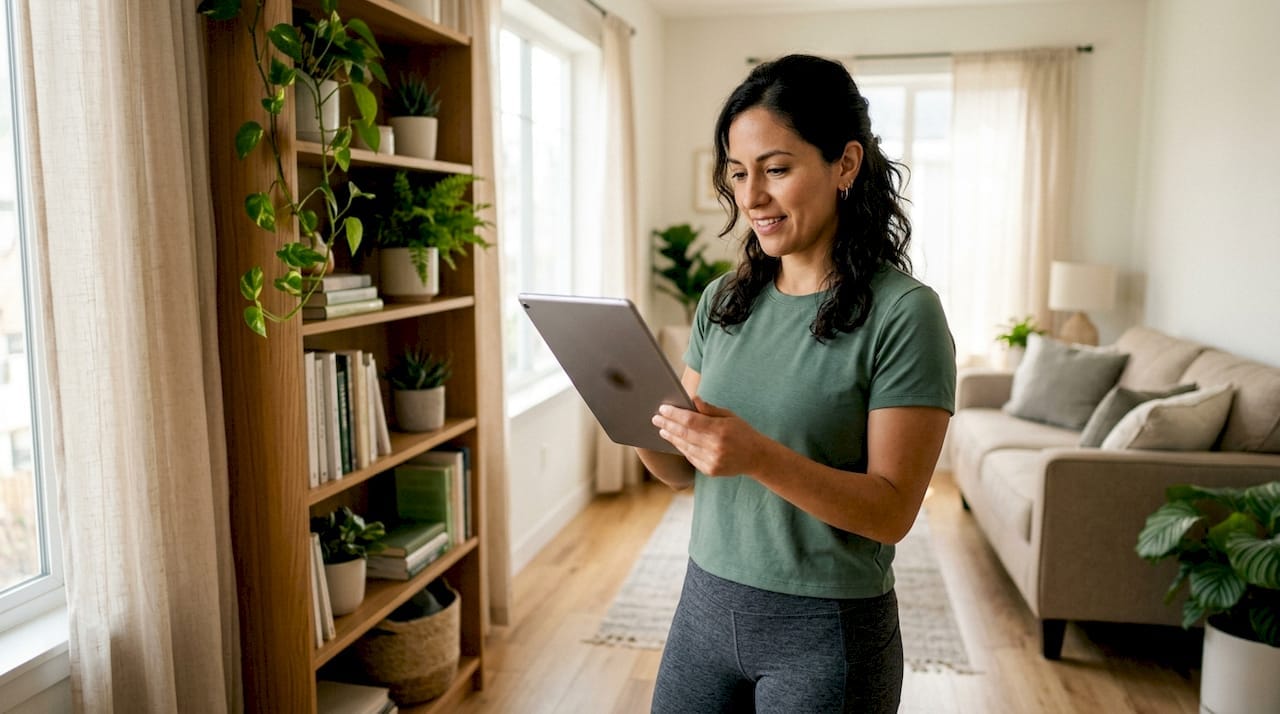
Telehealth weight loss program success factors are defined as the measurable clinical, behavioral, and technological conditions that determine whether a patient achieves and maintains meaningful weight reduction through a virtual care model. Research shows that engaged patients lose 22.9% of body weight at 12 months compared to 17.5% for non-engaged patients. That 5.3 percentage point gap nearly triples the likelihood of achieving 20% or greater weight loss. For US adults with a BMI of 27 or higher, understanding these factors is the difference between a program that works and one that stalls after the first month. The core drivers are sustained digital engagement, integrated medical oversight, personalized coaching, and effective GLP-1 medication management.
1. How sustained digital engagement drives weight loss outcomes
Sustained digital engagement is the single strongest predictor of long-term weight loss success in virtual programs. Each additional month of active engagement yields measurable weight reduction, independent of a patient's starting BMI, age, or demographics. That finding matters because it means your effort level outperforms your starting point as a predictor of results.

Engagement in this context means more than logging in. It includes meal tracking, coach messaging, progress check-ins, and responding to clinical prompts. Programs that build these habits into daily routines see far better retention past the critical 90-day mark, when most patients begin to disengage.
Common engagement features that correlate with better outcomes include:
- Meal and activity logging with real-time feedback from coaches
- In-app messaging for direct, two-way communication with clinical staff
- Progress tracking dashboards showing weight trends and goal milestones
- Bluetooth scale integration for automatic, accurate weigh-ins
- Dynamic educational content delivered based on where the patient is in the program
Pro Tip: Set a recurring daily reminder for your first 90 days to complete at least one engagement action, whether that is logging a meal, messaging your coach, or reviewing your progress. Consistency in the early phase builds the habit that carries you through the plateau.
Older patients and those with higher BMIs tend to show higher engagement rates in digital programs. Male patients and those with diabetes show lower engagement on average. Programs that recognize these patterns and adjust outreach accordingly produce better results across diverse patient populations.
2. What role do medical oversight and GLP-1 pharmacotherapy play?
Medical oversight is not optional in effective telehealth weight loss. It is the clinical foundation that makes medication safe, appropriate, and effective for each patient. GLP-1 receptor agonists, including compounded semaglutide and compounded tirzepatide, are the primary pharmacological tools used in these programs.
Standard GLP-1 eligibility requires a BMI of 30 or higher, or a BMI of 27 or higher with at least one weight-related comorbidity such as hypertension, type 2 diabetes, or sleep apnea. Medications are fulfilled through licensed, USP-compliant compounding pharmacies and shipped directly to the patient. Most patients begin to see measurable outcomes within 2–3 months, with programs running up to 18 months.
Combining GLP-1 receptor agonists with digital coaching produces better sustained weight loss and cardiometabolic improvements than medication alone. That combination addresses both the physiological and behavioral dimensions of obesity, which is why medication-only approaches consistently underperform over the long term.
| Feature | Entry-level programs | Integrated hybrid programs |
|---|---|---|
| Eligibility review | Basic BMI check | Full clinical intake with comorbidity review |
| Medication type | Generic options | Compounded semaglutide or tirzepatide |
| Pharmacy compliance | Varies | Licensed, USP-compliant pharmacy |
| Coaching intensity | Automated messages | Licensed coach with scheduled check-ins |
| Side effect support | Email only | On-demand teleconsultation |
| Typical cost range | $149–$399/month | Published all-in pricing |
Most patients regain weight after stopping GLP-1 medications without behavioral and lifestyle support in place. That finding underscores why medication alone is not a complete strategy. The medical component must be paired with coaching and engagement tools to produce durable results.
3. How personalized coaching and cultural sensitivity affect outcomes
Coaching quality is a direct determinant of patient retention and behavioral change. Generic, scripted coaching reduces engagement, particularly among minority ethnic groups, while tailored, empathetic communication improves adherence and long-term maintenance. The difference is not subtle. Patients who feel their coach understands their specific lifestyle, cultural food preferences, and personal barriers stay in programs longer and lose more weight.
Coaching fidelity refers to how closely a coach follows a personalized, evidence-based approach rather than a one-size-fits-all script. High-fidelity coaching involves two-way dialogue, flexible scheduling, and adjustments based on patient feedback. Low-fidelity coaching sends the same automated message to every patient regardless of their progress or circumstances.
Key coaching features that support effective virtual weight loss include:
- Flexible scheduling to accommodate different time zones and work schedules
- Diet and lifestyle tailoring based on cultural food traditions and personal preferences
- Motivational support grounded in behavioral change frameworks, not generic encouragement
- Proactive outreach when engagement drops, rather than waiting for the patient to reach out
- Clear escalation paths to a licensed clinician when medical questions arise
Pro Tip: Ask your coach directly: "Can you adjust my meal plan to reflect my cultural diet?" and "How will you track my progress between sessions?" If the answers are vague or scripted, that is a signal the program lacks the personalization that drives results.
Culturally sensitive and personalized coaching builds trust, which is the foundation of behavioral adherence. Patients who trust their coach are more likely to report side effects early, stay honest about setbacks, and follow through on lifestyle changes. That trust is not built through automation. It requires human judgment and genuine responsiveness.
4. What app features and program design elements facilitate success?
Program design determines whether a patient can access the right support at the right moment. Digital health apps function best as two-way communication platforms for medication titration and side effect management, not just passive tracking tools. Programs that treat the app as a data collection device miss the clinical value of real-time patient-provider interaction.
Omnichannel access is the design standard that separates effective programs from basic apps. It means patients can reach clinical support through in-app chat, scheduled video visits, and asynchronous messaging, depending on the urgency of their need. A patient experiencing nausea from a GLP-1 dose adjustment should not have to wait three days for an email response.
Prompt teleconsultations for side effect management prevent early treatment dropout and improve medication adherence in GLP-1 telehealth programs. That is a clinically significant finding. Early dropout is the primary reason telehealth weight loss programs fail to deliver results, and most early dropout is driven by unmanaged side effects.
| App feature | Patient benefit | Outcome impact |
|---|---|---|
| Bluetooth scale integration | Automatic, accurate weight data | Reduces logging friction, improves data quality |
| In-app coach messaging | Direct access to support between visits | Increases engagement and adherence |
| Medication titration requests | Patient-initiated dose adjustments | Reduces side effect-driven dropout |
| Dynamic educational content | Personalized learning based on program stage | Improves behavioral adherence |
| Progress tracking dashboard | Visual feedback on weight and health trends | Sustains motivation past initial weeks |
Program scalability matters for diverse populations. A program designed only for patients with reliable broadband and smartphone access excludes a significant portion of the BMI 27+ population. Effective programs offer low-bandwidth options, telephone-based check-ins, and clear written instructions for patients who are less comfortable with app-based tools.
5. How to choose the best telehealth weight loss program for your needs
Selecting the right program requires evaluating specific criteria, not just price or convenience. The most effective virtual weight loss programs combine licensed medical oversight, evidence-based coaching, GLP-1 medication access, and engagement tools into one integrated model. Programs that offer only one or two of these elements consistently underperform.
Key selection criteria to evaluate before enrolling:
- Medical oversight level: Does a licensed clinician review your intake and approve your medication? Is there on-demand access to clinical support?
- Coaching quality: Are coaches licensed or certified? Do they offer personalized plans or scripted interactions?
- Medication availability: Does the program use licensed, USP-compliant pharmacies? Is pricing published and all-in?
- Engagement tools: Does the app support two-way communication, progress tracking, and meal logging?
- Cost transparency: Are all fees listed upfront, including medication, shipping, and consultations?
Hybrid care models, which combine app-based tools with real teleconsultations, outperform standalone apps and medication-only approaches. A program that offers a GLP-1 prescription but no coaching support is not a complete program. Neither is a coaching app that cannot connect you to a licensed prescriber when your clinical needs change.
Verify program legitimacy before enrolling. LegitScript certification indicates a telehealth provider meets pharmacy compliance and prescribing standards. Named pharmacy partners and published pricing are additional signals of a trustworthy operation. You can review GLP-1 program pricing and compliance details to benchmark what a transparent program looks like.
Pro Tip: Before enrolling, ask three questions: Who reviews my intake and approves my prescription? Which pharmacy fulfills my medication? What happens if I experience side effects between scheduled visits? A program that cannot answer all three clearly is not ready to support your care.
Key takeaways
Sustained digital engagement, integrated GLP-1 pharmacotherapy, and personalized coaching are the three non-negotiable success factors in any effective telehealth weight loss program.
| Point | Details |
|---|---|
| Engagement drives outcomes | Engaged patients lose 22.9% of body weight versus 17.5% for non-engaged patients at 12 months. |
| GLP-1 plus coaching outperforms medication alone | Combining GLP-1 therapy with digital coaching improves both weight loss and cardiometabolic health. |
| Coaching personalization reduces dropout | Generic scripted coaching lowers engagement, especially in minority ethnic groups; tailored coaching improves retention. |
| Side effect management prevents early dropout | Prompt teleconsultations for nausea and other GLP-1 side effects are directly linked to better medication adherence. |
| Program design determines access | Omnichannel programs with two-way clinical communication consistently outperform passive tracking apps. |
What I've learned about what actually makes these programs work
Most patients focus on the medication. That is understandable. GLP-1 drugs produce real, visible results, and the clinical evidence behind them is strong. But in my experience reviewing how these programs perform over 12 to 18 months, the medication is rarely the variable that separates patients who succeed from those who plateau and quit.
The variable is engagement quality. Not how often you log in, but whether the program responds to you in a way that keeps you honest, motivated, and clinically supported. A patient who messages their coach about a bad week and gets a thoughtful, personalized response is far more likely to stay in the program than one who gets an automated reply.
The programs that produce the best long-term results treat the app as a clinical communication tool, not a fitness tracker. They use it to manage dose titration, flag side effects early, and maintain a continuous feedback loop between patient and provider. That is what hybrid care actually means in practice.
My honest recommendation: do not enroll in any program that cannot tell you exactly who reviews your intake, which pharmacy fills your prescription, and how you reach a clinician between visits. Those three answers reveal whether a program is built around patient outcomes or around patient acquisition.
— Miles
Ozari Health's approach to telehealth weight loss
Ozari Health is built around the success factors this article covers. Licensed providers review every patient's eligibility, including BMI thresholds and comorbidities, before prescribing compounded semaglutide, $86/mo on Ozari One, billed $258 every 3 months, or compounded tirzepatide, $125/mo on Ozari One, billed $375 every 3 months. Medications ship from licensed, USP-compliant compounding pharmacies with no hidden fees. Ozari One ships to every state except California; California patients use Ozari Select, $145/mo billed quarterly for semaglutide or $199/mo for tirzepatide.
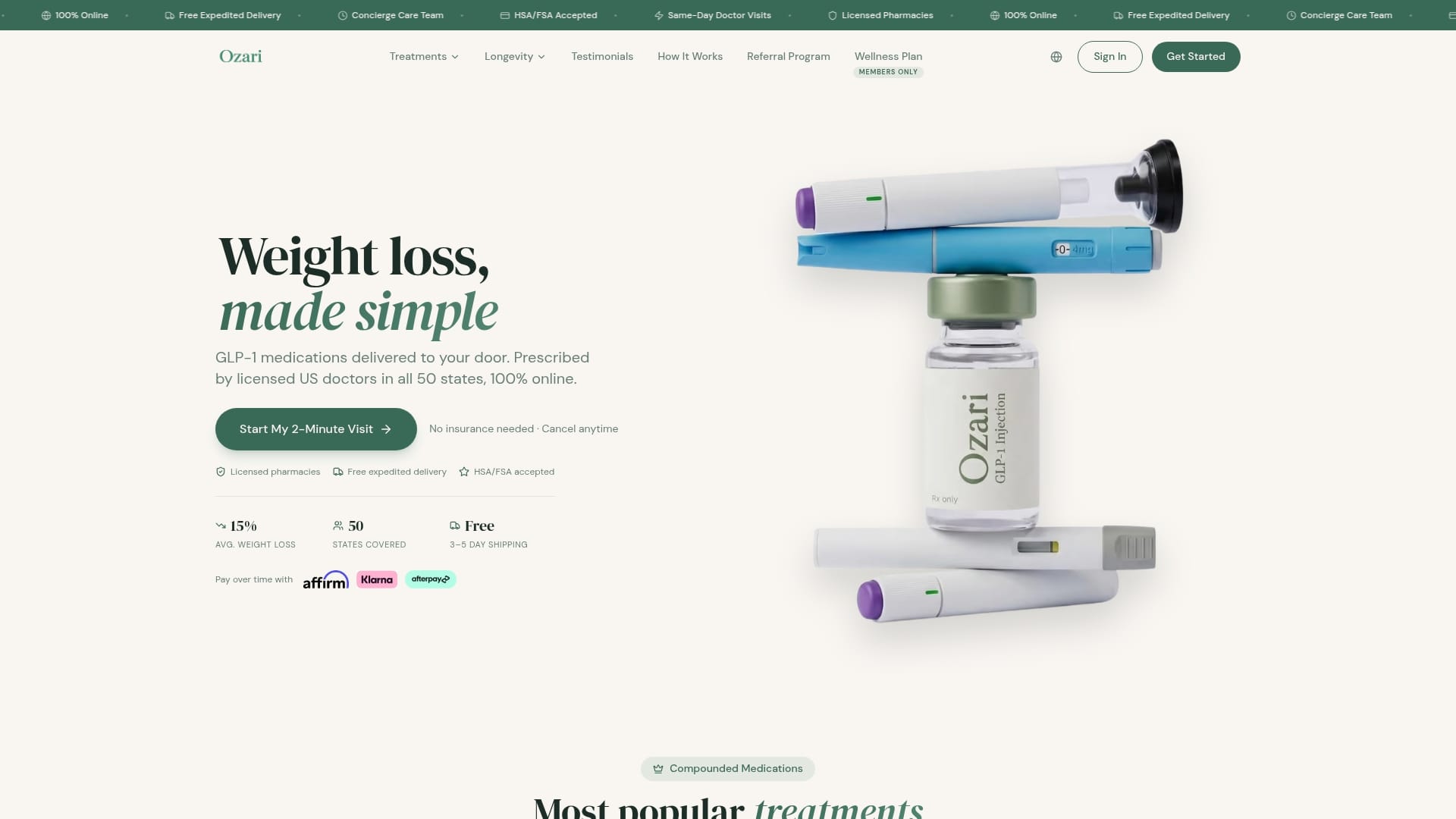
Ozari Health holds LegitScript certification and publishes all-in pricing with named pharmacy partners. Ongoing clinical support covers dosing adjustments, side effect management, and refills. Patients in all 50 states can access the program without insurance. Review GLP-1 medication details and eligibility criteria to see whether Ozari Health's program fits your clinical profile and budget.
FAQ
What is the most important success factor in telehealth weight loss?
Sustained digital engagement is the strongest predictor of long-term weight loss. Engaged patients lose 22.9% of body weight at 12 months compared to 17.5% for non-engaged patients.
Who qualifies for a GLP-1 telehealth weight loss program?
Standard eligibility requires a BMI of 30 or higher, or a BMI of 27 or higher with at least one weight-related comorbidity such as hypertension or type 2 diabetes.
How does a complete telehealth weight loss intake work?
A licensed clinician reviews your health history, BMI, and comorbidities before approving a prescription. Medication is then fulfilled through a licensed compounding pharmacy and shipped directly to you.
Why do patients regain weight after stopping GLP-1 medications?
Most patients regain weight after stopping GLP-1 medications without behavioral and lifestyle support in place. Programs that combine medication with coaching and engagement tools produce better long-term results.
What should I look for in a top cash-pay weight loss telehealth program?
Look for published all-in pricing, LegitScript certification, named pharmacy partners, licensed clinical oversight, and on-demand side effect support. These features indicate a program built for patient outcomes, not just patient sign-ups.
Sources
- engaged patients lose 22.9%
- Each additional month of active engagement
- Standard GLP-1 eligibility
- Combining GLP-1 receptor agonists with digital coaching
- Most patients regain weight
- Generic, scripted coaching
Recommended
Related Articles
Men: Fella Health Safety Risks, Real Costs, and an $86 Alternative
A safety-first look at Fella Health for men: why compounded GLP-1s show higher FDA reporting risks, how to calculate all-in monthly cost, and an $86 Ozari...
Read more →generalHallandale Semaglutide vs Tirzepatide: What Patients Should Know
Compare the compounded semaglutide and tirzepatide formulations Hallandale currently lists, including concentrations, regulatory status, dosing differences, and Ozari fulfillment.
Read more →generalHallandale Pharmacy Shipping: Delivery, Packaging & Storage Guide
How Hallandale Pharmacy fulfillment works, what to check when a GLP-1 shipment arrives, storage guidance, delays, and Ozari order support.
Read more →