GLP-1 Prescription Without Insurance: 2026 Cash-Pay Guide
Published July 5, 2026

TL;DR:
- Patients can access GLP-1 prescriptions without insurance through manufacturer programs, compounded telehealth options, or assistance programs. Compounded medications are cheaper but lack FDA approval and large-scale evidence, requiring careful sourcing from licensed pharmacies. Choosing the safest option depends on clinical oversight, affordability, and confirmation of pharmacy credentials.
Getting a GLP-1 prescription without insurance is possible through several legitimate cash-pay routes, including manufacturer direct programs, compounded telehealth prescriptions, and patient assistance programs. The term "GLP-1 prescription without insurance" covers any pathway where patients pay out of pocket for glucagon-like peptide-1 receptor agonists, the class of medications that includes semaglutide and tirzepatide. Retail list prices for branded GLP-1 drugs exceed $1,000 per month, but cash-pay alternatives bring that cost down substantially. This guide explains every legitimate option available in 2026, what each costs, and how to choose safely.
What are the main cash-pay options for GLP-1 prescriptions without insurance?
Four distinct pathways exist for patients who need to buy GLP-1 without insurance. Each differs in cost, eligibility, and the type of medication provided.
Manufacturer self-pay programs
Novo Nordisk's NovoCare program offers Wegovy (injectable semaglutide) for $199–$349 per month for cash-pay patients, with a Wegovy pill option starting at $149 per month. Eli Lilly's LillyDirect program offers Zepbound (tirzepatide) vials from $299–$449 per month depending on dosage. These are FDA-approved branded medications dispensed through licensed retail pharmacies. Patients access them directly through the manufacturer's website without going through insurance.
Compounded GLP-1 prescriptions via telehealth
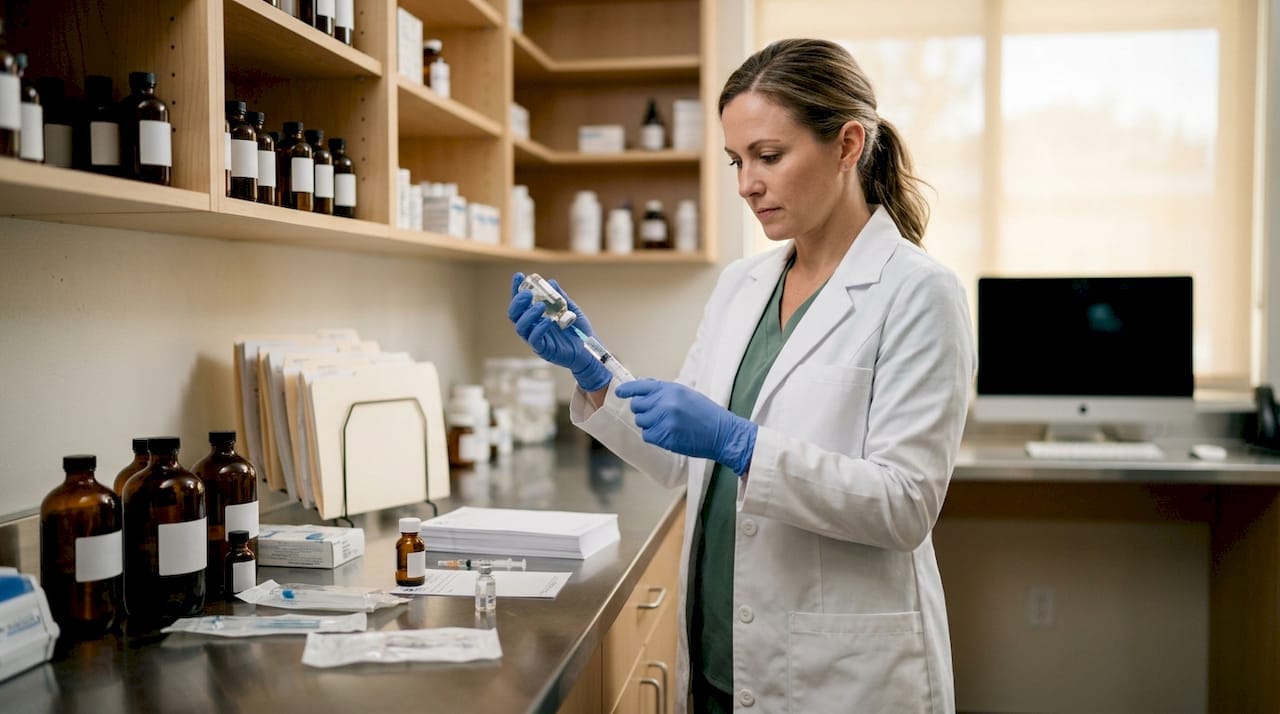
Compounded semaglutide and tirzepatide are prepared by state-licensed 503A or FDA-registered 503B pharmacies under an individual prescription. They cost roughly 70–90% less than branded alternatives, with typical monthly prices ranging from $86 to $400. Compounded versions are not FDA-approved and are not generic equivalents of branded drugs. They are a separate category of medication with a different regulatory status. Telehealth platforms connect patients with licensed clinicians who evaluate eligibility and write the prescription.
Manufacturer savings cards
Manufacturer savings cards for Wegovy and Zepbound reduce copays for commercially insured patients. These cards exclude Medicare, Medicaid, VA, and uninsured patients entirely. Many patients assume savings cards are available to anyone, but that is not the case. If you do not have commercial insurance that covers GLP-1 medications, savings cards are not an option.
Medicare GLP-1 Bridge program
The Medicare GLP-1 Bridge program launched on july 1, 2026, and offers GLP-1 medications at approximately $50 per month for qualifying Medicare beneficiaries. Eligibility requires a BMI of 35 or higher, or a BMI of 30 or higher with at least one comorbidity such as type 2 diabetes or hypertension. Public awareness of this program remains low, which means many eligible seniors are still paying full price unnecessarily.
Pro Tip: If you are on Medicare and meet the BMI criteria, check the Medicare GLP-1 Bridge program before paying cash-pay rates. At $50 per month, it is the lowest-cost legitimate option currently available.
How do branded GLP-1 drugs compare to compounded alternatives?
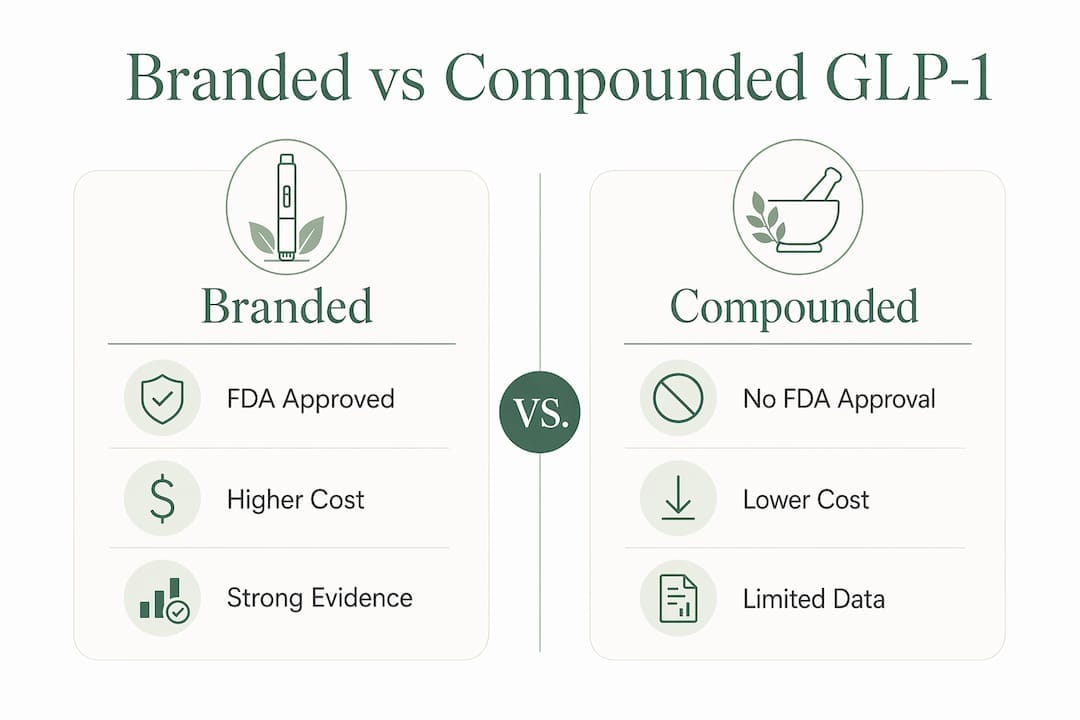
The choice between FDA-approved branded medications and compounded alternatives comes down to cost, clinical evidence, delivery method, and regulatory oversight.
Branded GLP-1 drugs like Wegovy and Zepbound have extensive clinical trial backing. The STEP trials for semaglutide and the SURMOUNT trials for tirzepatide each enrolled thousands of participants over multiple years. Compounded GLP-1 medications lack this level of clinical evidence, which creates uncertainty about cardiovascular outcomes and long-term weight loss results. That gap in data does not mean compounded versions are ineffective, but it does mean patients accept more uncertainty.
Delivery method is another practical difference. Branded drugs use pre-filled auto-injector pens with fixed doses. Compounded versions typically arrive as vials requiring a syringe for self-injection. Dosing errors are more common with vials, which is one reason the FDA has flagged safety concerns with compounded formulations.
"The absence of FDA approval and variability in pharmacy standards presents a safety trade-off many patients overlook when choosing compounded GLP-1 medications based on price alone."
| Feature | Branded GLP-1 drugs | Compounded GLP-1 medications |
|---|---|---|
| FDA approval | Yes | No |
| Typical monthly cost (cash pay) | $149–$449 via manufacturer programs | $86–$400 via telehealth |
| Clinical trial data | Extensive (STEP, SURMOUNT) | None at scale |
| Delivery method | Auto-injector pen | Vial and syringe |
| Pharmacy oversight | FDA-regulated manufacturer | 503A state-licensed or 503B FDA-registered |
| Savings cards available | Only for commercially insured | Not applicable |
Pro Tip: Ask any telehealth provider whether their compounding pharmacy is a 503A or 503B facility. A 503B facility operates under stricter FDA oversight and generally offers more consistent quality control.
What practical steps can patients take to save money on GLP-1 medications?
Patients without insurance have real options for reducing GLP-1 medication costs. The following steps apply regardless of which pathway you choose.
-
Compare manufacturer direct programs first. NovoCare and LillyDirect offer the lowest cash-pay prices for FDA-approved branded drugs. Check both before assuming retail pharmacy pricing is your only option. Retail prices at standard pharmacies often exceed $1,000 per month without any program enrollment.
-
Evaluate compounded options through a licensed telehealth provider. Compounded semaglutide from a licensed pharmacy costs $86 per month on Ozari One, billed $258 every 3 months. Confirm the prescribing provider is licensed in your state and that the pharmacy holds either 503A or 503B status before ordering.
-
Use HSA or FSA funds when available. GLP-1 medications prescribed for obesity management qualify for HSA and FSA payment when your provider documents medical necessity. Paying with pre-tax HSA or FSA dollars effectively reduces your out-of-pocket cost by 20–37%, depending on your tax bracket.
-
Check patient assistance programs carefully. Manufacturer patient assistance programs are targeted primarily at patients with diagnosed type 2 diabetes or severe financial hardship. They are less accessible to patients seeking GLP-1 medications for weight management alone. Confirm eligibility criteria before spending time on an application.
-
Consider privacy when using employer plans. Patients on employer self-insured plans that exclude GLP-1 coverage may find that paying cash directly through a manufacturer program is both cheaper and more private than filing a claim that gets denied. An insurance denial creates a record; a cash-pay transaction does not.
-
Avoid unauthorized online sellers. The FDA has issued warnings against fraudulent GLP-1 drugs marketed through unregulated websites. Purchasing from an unlicensed source risks receiving counterfeit or mislabeled medication. The price savings are not worth the safety risk.
For a detailed breakdown of cost-reduction strategies, the lower medication cost guide from Ozari Health covers program eligibility and alternative funding sources in depth.
What legal and safety warnings apply to buying GLP-1 prescriptions without insurance?
Buying GLP-1 medications outside of a licensed pharmacy or without a valid prescription carries serious legal and health risks. The FDA has issued specific warnings about unapproved GLP-1 products sold online, including products labeled as "research chemicals" or "peptides."
Key safety considerations include:
- Pharmacy licensing matters. Compounded medications must come from a state-licensed 503A pharmacy or an FDA-registered 503B outsourcing facility. A 503B facility operates under stricter manufacturing standards, including batch testing and sterility requirements. The quality of compounded GLP-1 products varies significantly depending on which type of pharmacy prepares them.
- Dosing errors are a documented risk. Vial-based compounded medications require patients to draw and inject their own doses. Errors in measurement have been linked to adverse events including nausea, vomiting, and hypoglycemia. A licensed clinician should guide dose titration throughout treatment.
- Third-party testing is a quality signal. Reputable compounding pharmacies provide certificates of analysis from independent labs confirming potency and purity. Ask for this documentation before filling a prescription.
- Counterfeit products exist. The FDA warns against fraudulent GLP-1 drugs marketed through social media and unregulated websites. These products may contain incorrect active ingredients, incorrect concentrations, or harmful contaminants.
- A valid prescription is required. No legitimate pharmacy, compounding or otherwise, will dispense a GLP-1 medication without a prescription from a licensed provider. Any seller offering GLP-1 medications without a prescription is operating outside the law.
Patients who want the safety of a licensed prescribing process without the cost of branded drugs should work with a telehealth platform that holds LegitScript certification and names its pharmacy partners publicly.
Key Takeaways
Cash-pay patients can access legitimate GLP-1 prescriptions without insurance through manufacturer direct programs, compounded telehealth prescriptions, and patient assistance programs, each with distinct costs, safety profiles, and eligibility requirements.
| Point | Details |
|---|---|
| Manufacturer programs offer branded drugs | NovoCare and LillyDirect provide FDA-approved GLP-1 medications from $149–$449 per month for cash-pay patients. |
| Compounded options cost significantly less | Compounded semaglutide is $86 per month on Ozari One, billed quarterly, but lacks FDA approval and large-scale clinical trial data. |
| Savings cards exclude uninsured patients | Wegovy and Zepbound savings cards apply only to commercially insured patients; uninsured patients cannot use them. |
| HSA/FSA funds reduce out-of-pocket costs | Patients with documented medical necessity can pay with pre-tax HSA or FSA dollars, reducing effective cost by 20–37%. |
| Pharmacy licensing determines safety | Choose a 503A or 503B licensed compounding pharmacy and confirm third-party testing before filling any compounded prescription. |
The real cost of choosing the cheapest option
The Ozari Health Editorial Team has reviewed hundreds of patient inquiries about GLP-1 access without insurance, and one pattern stands out clearly. Patients consistently underestimate the difference between "cheap" and "legitimate." A $40-per-month vial from an unverified online seller is not a bargain. It is an unquantified risk to your health and your money.
The patients who get the best outcomes are the ones who ask the right questions before ordering. Which pharmacy fills this prescription? Is it 503A or 503B licensed? Does the provider offer ongoing dosing support? What happens if I have a side effect? These questions separate a legitimate telehealth program from a fulfillment operation with no clinical oversight.
Compounded GLP-1 medications can be a sound choice when sourced correctly. The benefits of a medically supervised program go beyond the prescription itself. Dose titration guidance, side effect management, and refill oversight all reduce the risk of adverse events and improve long-term adherence. The cheapest option that includes those elements is almost always better than the cheapest option that does not.
Patients should also resist the assumption that FDA-approved always means unaffordable. Manufacturer direct programs have brought branded GLP-1 prices down to a range that competes with some compounded offerings, especially when HSA or FSA funds are applied. The right answer depends on your specific medical history, budget, and risk tolerance. A licensed clinician is the appropriate person to help you weigh those factors.
— Ozari Health Editorial Team
Ozari Health: cash-pay GLP-1 prescriptions, all 50 states
Ozari Health connects patients with board-certified licensed providers who evaluate eligibility and prescribe compounded GLP-1 medications entirely online. No insurance is required, and there are no hidden membership fees.
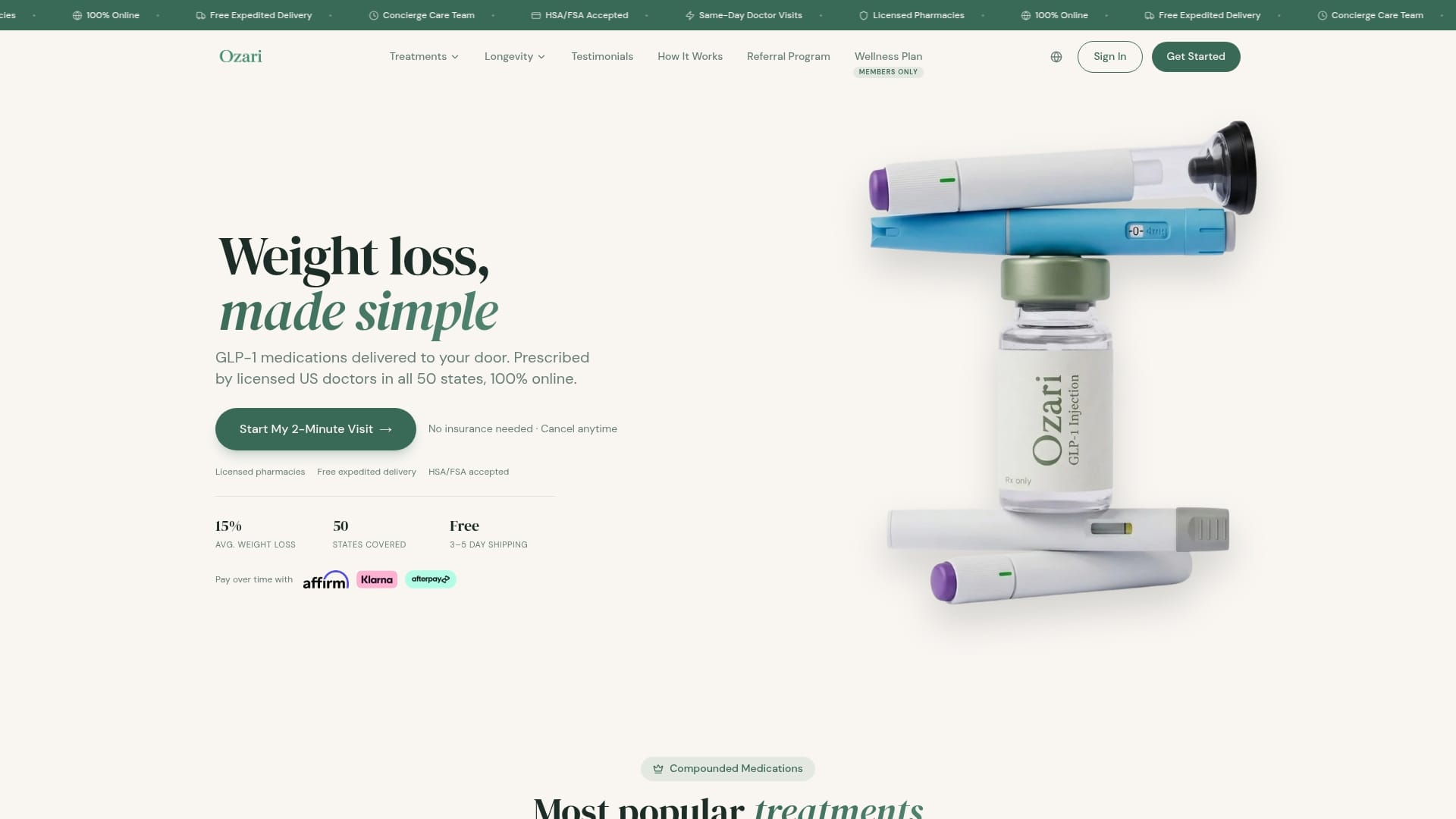
Compounded semaglutide is $86 per month on Ozari One, billed $258 every 3 months. Compounded tirzepatide is $125 per month on Ozari One, billed $375 every 3 months. Ozari One ships to every state except California; California patients use Ozari Select, $145/mo billed quarterly for semaglutide or $199/mo for tirzepatide. Both are fulfilled through licensed US compounding pharmacies and delivered directly to patients. Ozari Health holds LegitScript certification and publishes its pharmacy partners and all-in pricing publicly. Ongoing clinical support covers dosing, side effects, and refills throughout treatment. Patients looking for transparent pricing and a legitimate prescribing process can review full program details, GLP-1 pricing data, and the plain-English GLP-1 glossary on the Ozari Health website.
Medical disclaimer: This article is for informational purposes only and does not constitute medical advice. Consult a licensed healthcare provider before starting any GLP-1 medication. Reviewed by Dr. Michael Wasef, MD, Board-Certified Internal Medicine, Florida License ME125730.
FAQ
What is the cheapest legitimate way to get a GLP-1 prescription without insurance?
The lowest-cost option for Medicare-eligible patients is the Medicare GLP-1 Bridge program at approximately $50 per month. For non-Medicare patients, compounded semaglutide through a licensed telehealth provider is $86 per month on Ozari One, billed $258 every 3 months, and is among the lower-cost legitimate options.
Can I use a manufacturer savings card if I have no insurance?
No. Wegovy and Zepbound savings cards are available only to patients with commercial insurance that covers GLP-1 medications. Medicare, Medicaid, VA, and uninsured patients are explicitly excluded from these programs.
Are compounded GLP-1 medications safe?
Compounded GLP-1 medications prepared by licensed 503A or 503B pharmacies are legal and can be safe when prescribed and monitored by a licensed clinician. They are not FDA-approved and lack large-scale clinical trial data, so patients should confirm pharmacy credentials and request third-party testing documentation before use.
Can I use my HSA or FSA to pay for a GLP-1 prescription?
Yes. GLP-1 medications prescribed for obesity management qualify for HSA and FSA payment when a provider documents medical necessity. This reduces effective out-of-pocket cost by 20–37% depending on your tax bracket.
Do I need a prescription to get a compounded GLP-1 medication?
Yes. Every legitimate pharmacy, including compounding pharmacies, requires a valid prescription from a licensed provider. Any source offering GLP-1 medications without a prescription is operating outside federal and state law and should be avoided. Review common GLP-1 questions for additional guidance on the prescribing process.
Sources
Related Articles
Men: Fella Health Safety Risks, Real Costs, and an $86 Alternative
A safety-first look at Fella Health for men: why compounded GLP-1s show higher FDA reporting risks, how to calculate all-in monthly cost, and an $86 Ozari...
Read more →generalHallandale Semaglutide vs Tirzepatide: What Patients Should Know
Compare the compounded semaglutide and tirzepatide formulations Hallandale currently lists, including concentrations, regulatory status, dosing differences, and Ozari fulfillment.
Read more →generalHallandale Pharmacy Shipping: Delivery, Packaging & Storage Guide
How Hallandale Pharmacy fulfillment works, what to check when a GLP-1 shipment arrives, storage guidance, delays, and Ozari order support.
Read more →